Kraków in 3 Days: Our Real-Life Itinerary
By Jérôme R · Visited in July 2026 · Updated · How we work
Three days is a comfortable amount of time for Kraków: one day for the Old Town and the Jewish quarter of Kazimierz, one for Wawel Castle, and a third for the Auschwitz-Birkenau Memorial, a place of remembrance that requires at least a full half-day. This is the itinerary we followed as a family during a two-week trip across Poland in July 2026, and it's the one we'd recommend if you have three days to spare. To choose where to stay, check out our guide to Kraków's neighbourhoods. For a place-by-place list with our take on each visit, see things to do in Kraków. A note on transparency: in our case, these three days weren't consecutive — we explored the Old Town and Wawel on arrival, then went to the Auschwitz-Birkenau Memorial from our accommodation in Piotrowice, near Oświęcim, before coming back for one last evening in Kraków towards the end of the trip. The itinerary below describes our first-hand experience in the most logical order for a straight three-day stay.
Day 1: Old Town, the covered market and the Jewish quarter
We flew out on 15 July from Marseille: there's an early-morning direct Ryanair flight (departing at 6am) that reaches Kraków in under three hours — two and a half, in our case. We'd booked an “eco” car park at Marseille airport several months ahead, which kept our two-week parking bill under €80.
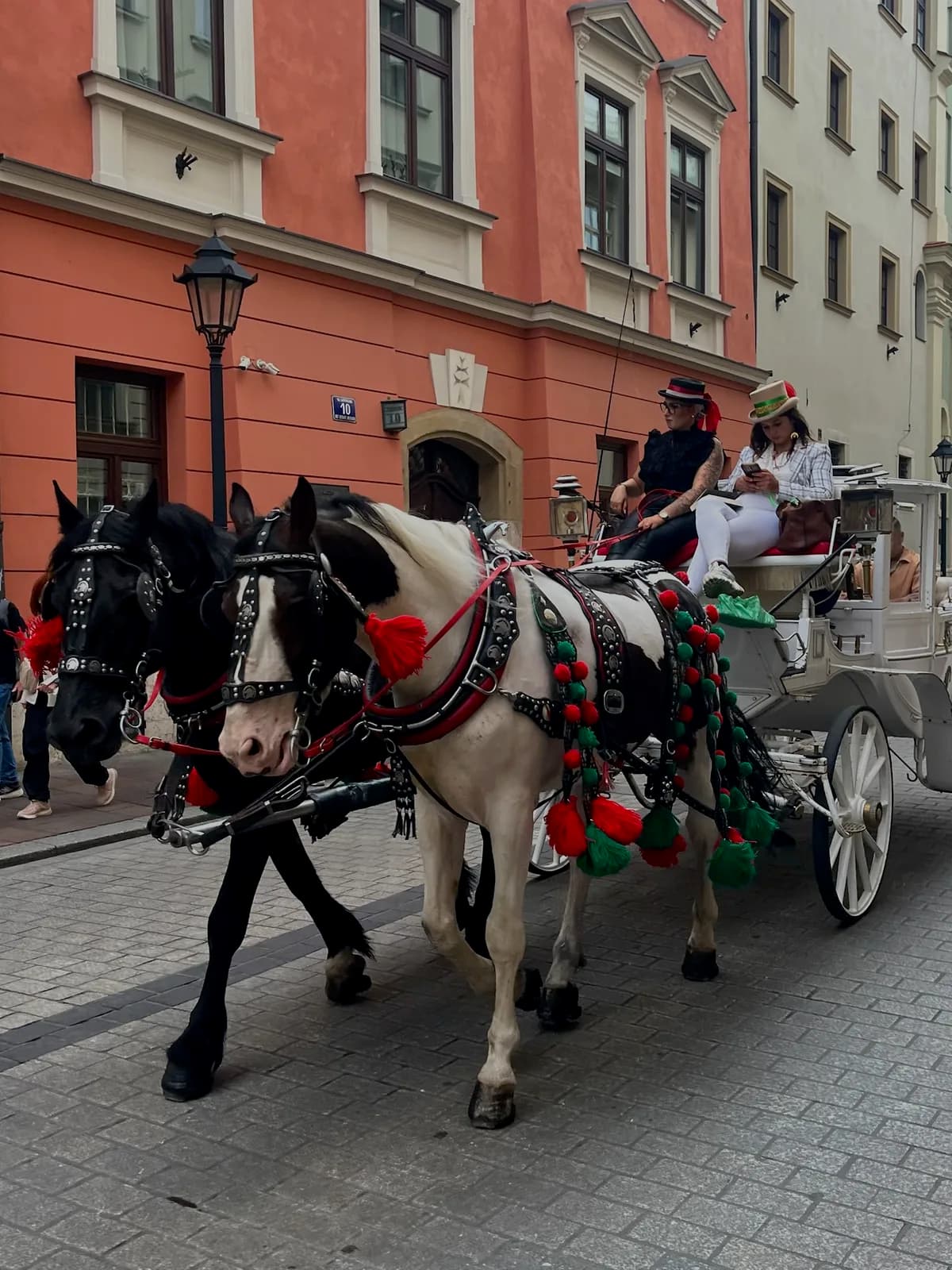
From experience — take this seriously: our bank card — a debit card, not a credit card — wasn't accepted as a deposit by our local car rental company at the airport. We had to cancel the insurance we'd already paid for through Booking and take their most expensive policy on the spot, plus the “return without refuelling” option: over €200 of unplanned extra cost. Always check exactly what type of card your rental company accepts before you leave. Second mishap of the day: when we picked up the car, a rear seatbelt turned out to be broken — back to the desk for an identical replacement vehicle.
We stayed at the MEININGER Kraków Centrum, just a few minutes' walk from the historic centre — a good-value chain hotel that we later found, without even looking for it, topping the Google Hotels results for nearly every “where to stay in Kraków” search we tried. The family room for four wasn't available until 3pm, but the hotel let us leave the car in its car park as soon as we arrived.
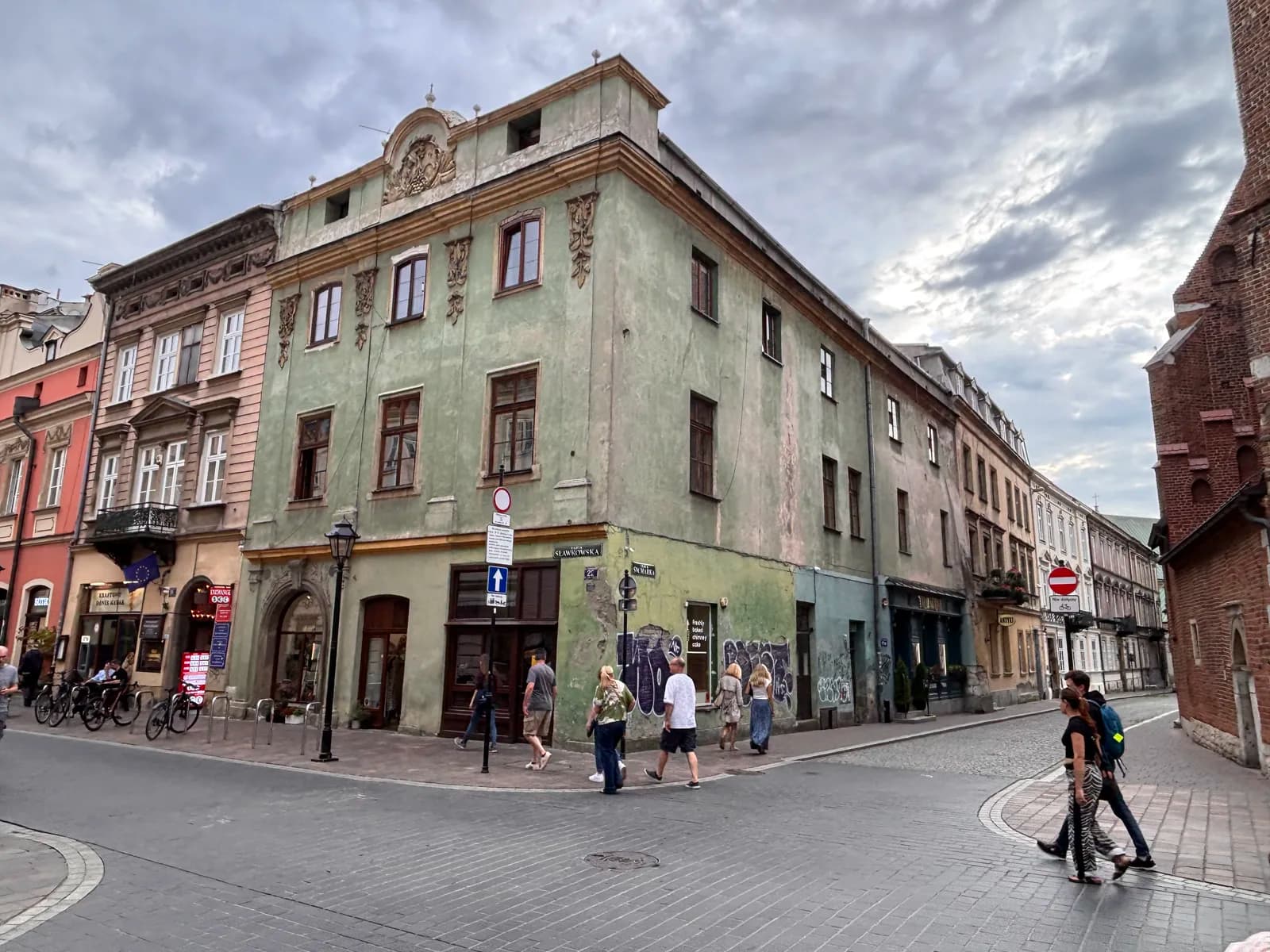
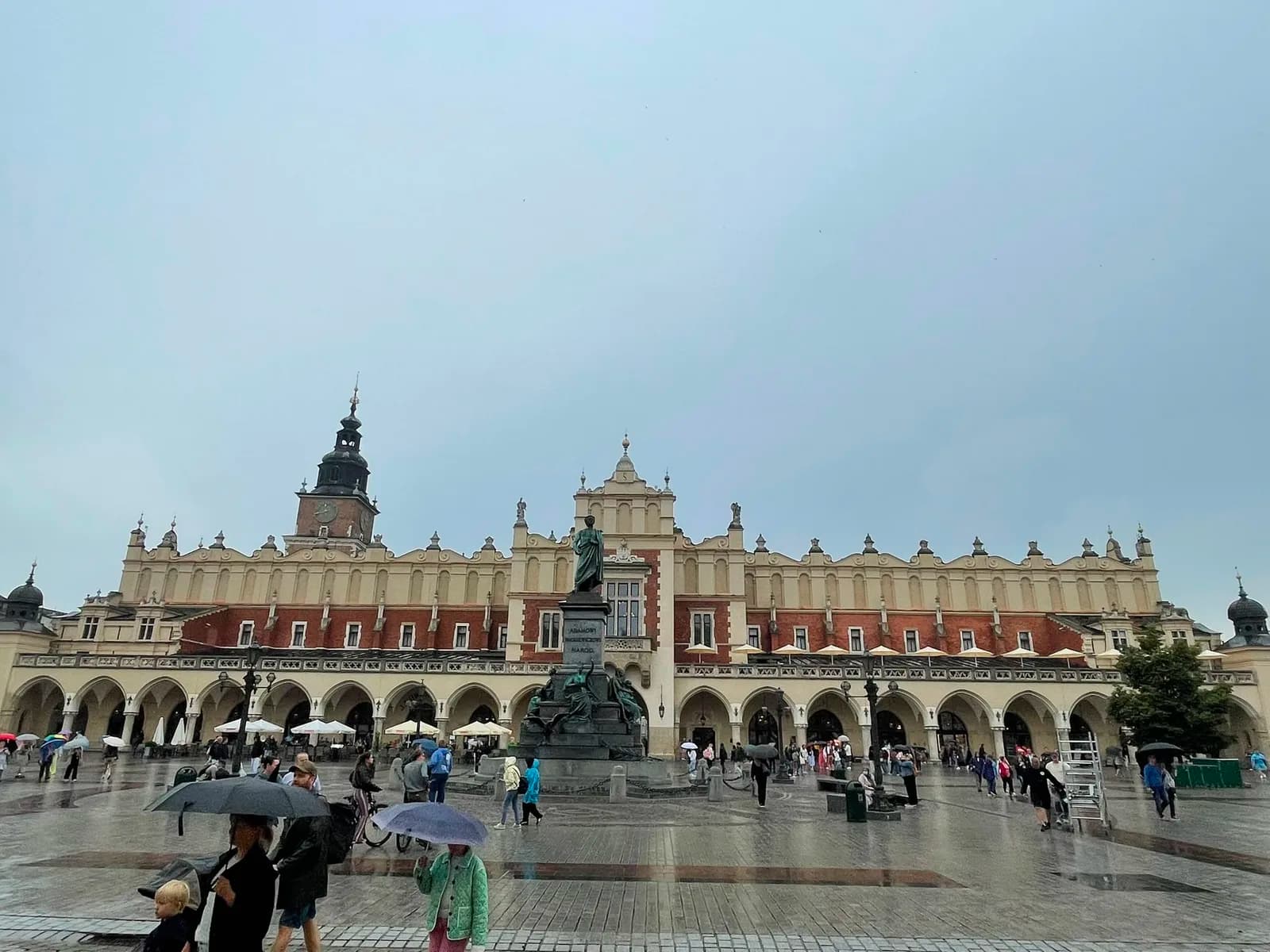
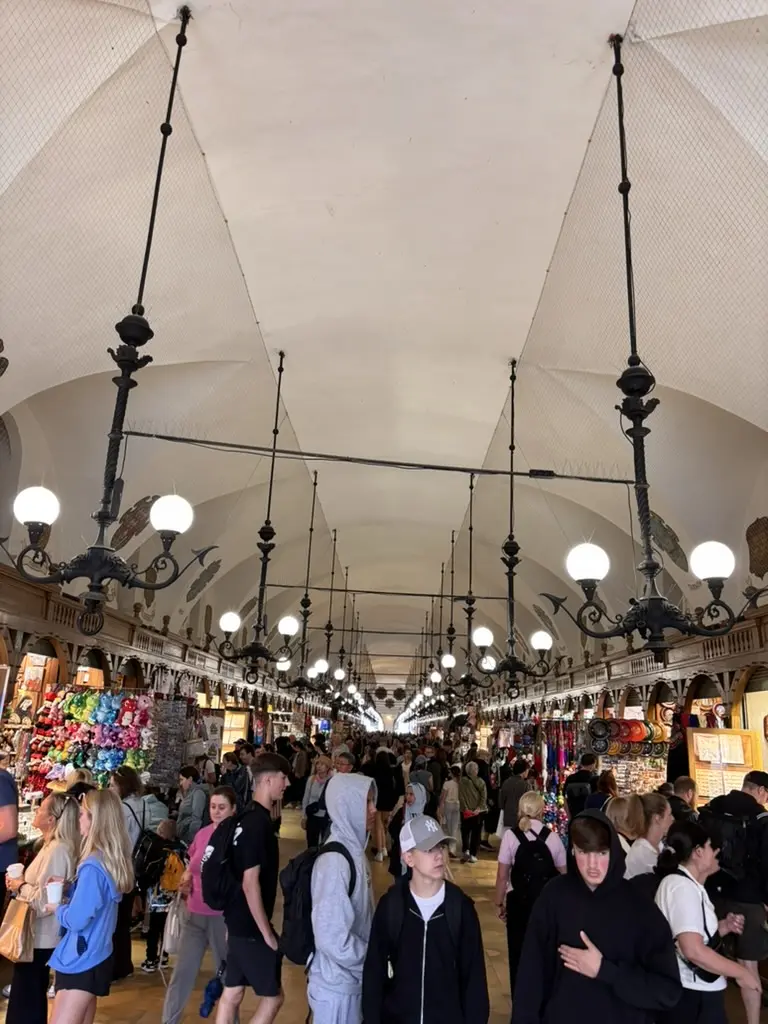
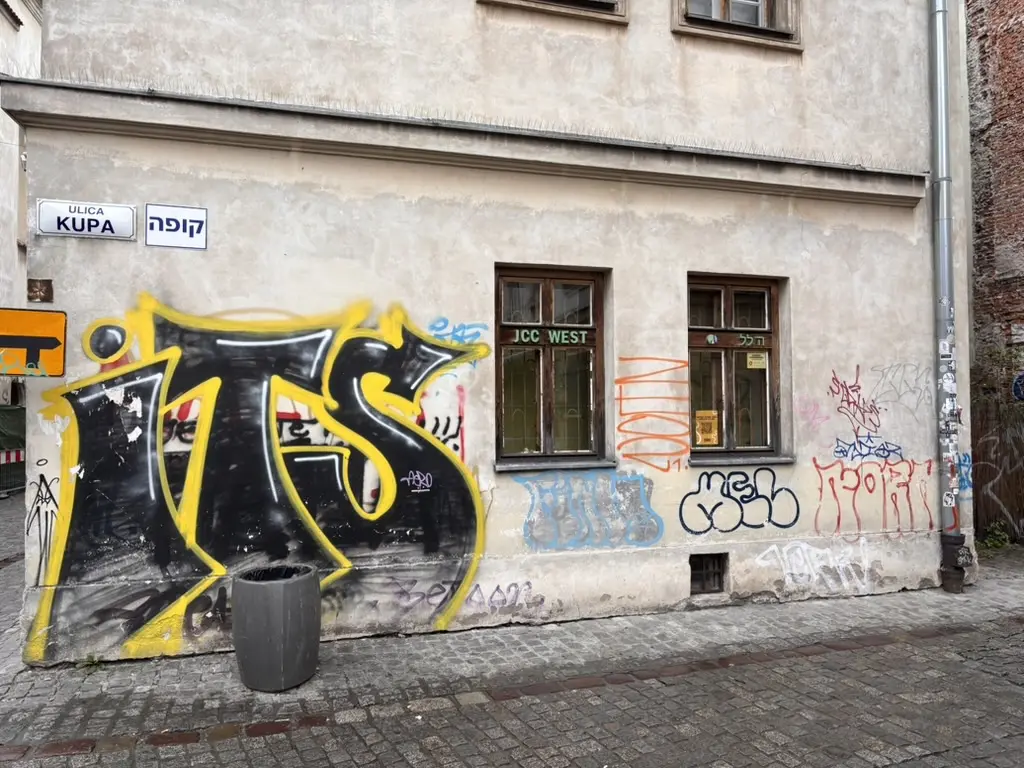
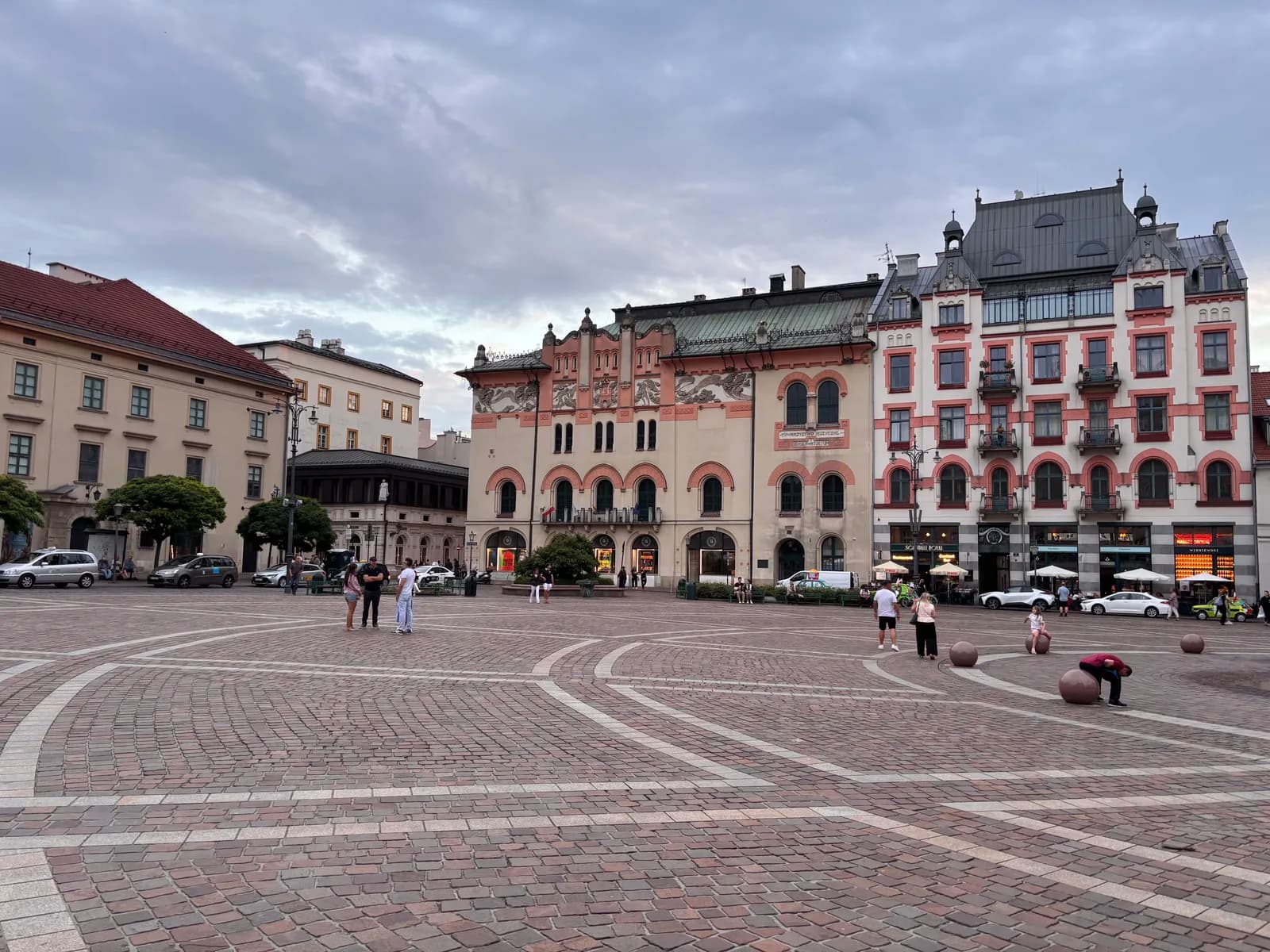
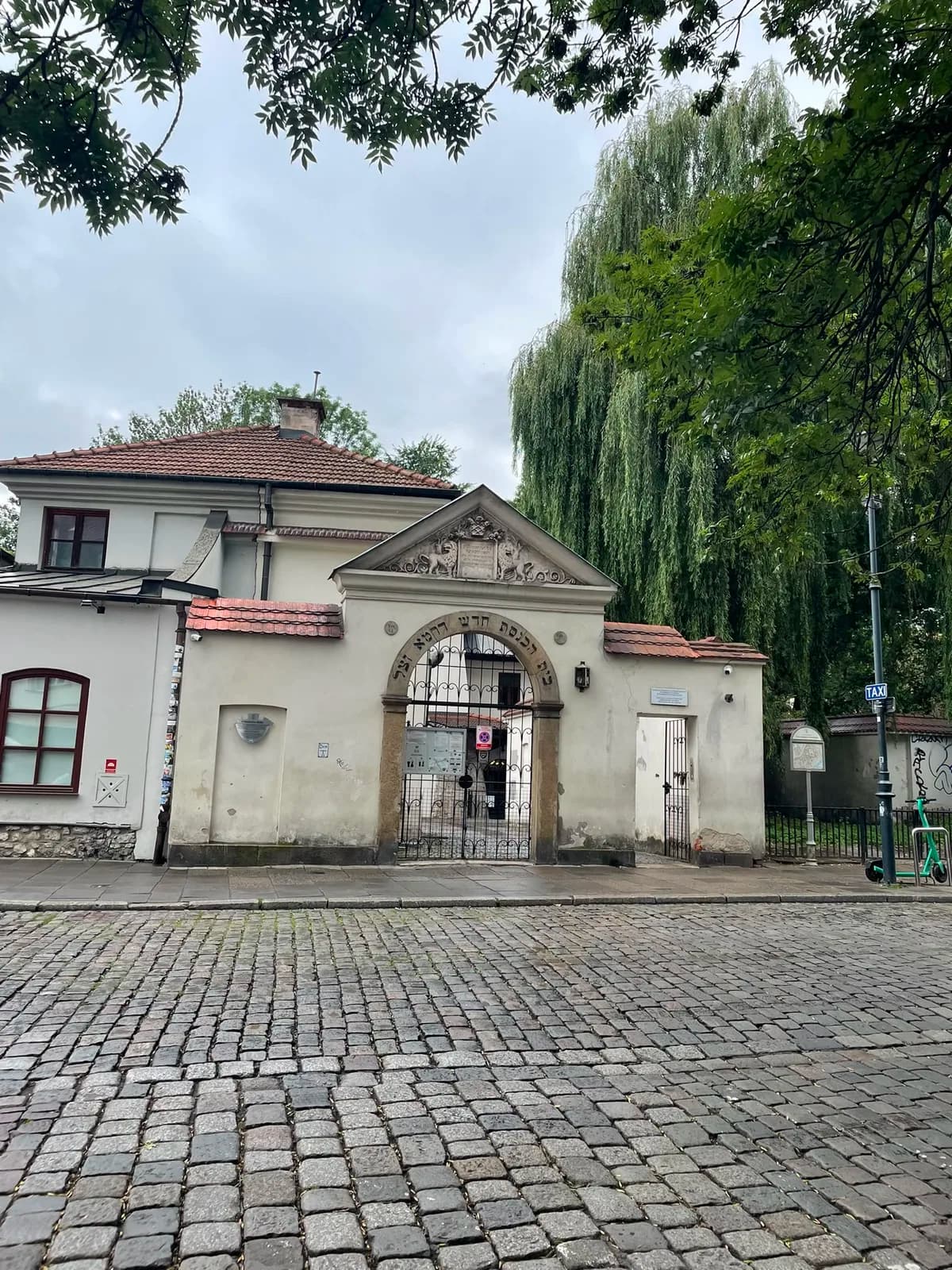
While waiting for the room, we headed into the Old Town on foot. The weather was overcast, almost rainy — and it felt fantastic after the heatwave we'd left behind in France. First stop: a small bar near the Jewish quarter serving very good, very cheap burgers. The afternoon continued with the Main Market Square (Rynek Główny) and its Cloth Hall (Sukiennice), the Old Town's historic covered market, before a wander through the Jewish quarter of Kazimierz and its side streets.
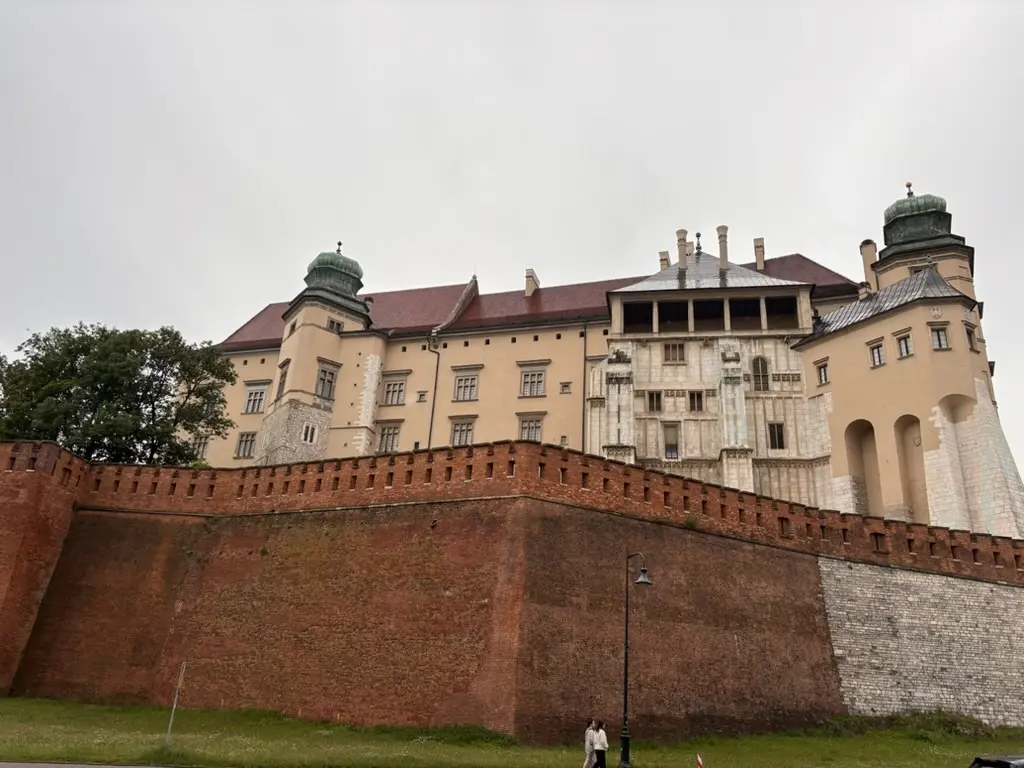
Day 2: Wawel Castle
Our second day was dedicated to the royal castle of Wawel, which we reached on foot from the hotel in the late morning — under bright sunshine this time — after a very full breakfast.
True story, July 2026: afterwards, we added a visit to the Dragon's Den — a visit we found fairly underwhelming, though the real iron dragon statue that breathes fire at the exit remains the highlight for photos. See our detailed article on Wawel Castle.
For lunch, we stopped at a supermarket for a hot dog — a surprisingly common and cheap option in Poland, sold everywhere from petrol stations to supermarkets. That was also the day we left Kraków for three nights in Piotrowice, near Oświęcim, a well-placed base for going to the Auschwitz-Birkenau Memorial and, on another day, to Energylandia.
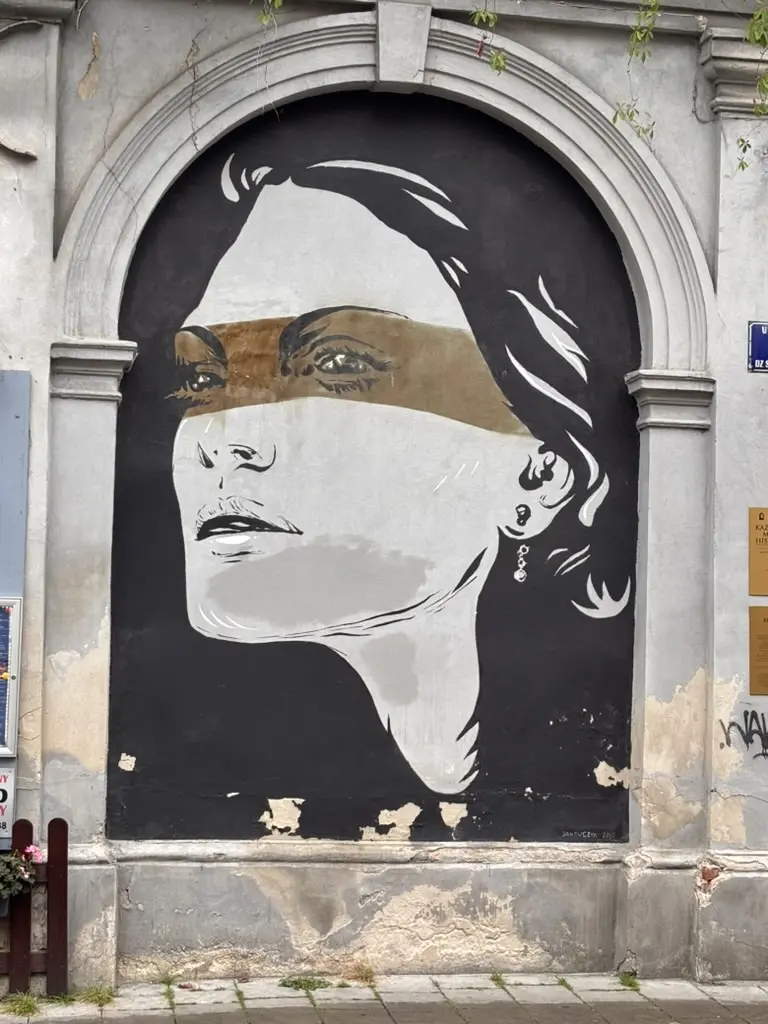
On our final return to Kraków, we took the time to wander back through Kazimierz to find the alleyway with a mural referencing the filming of *Schindler's List* — not to be confused with the Schindler Factory Museum (a paid museum, not covered here) — before a street-food dinner in the same neighbourhood.
Day 3: Auschwitz-Birkenau
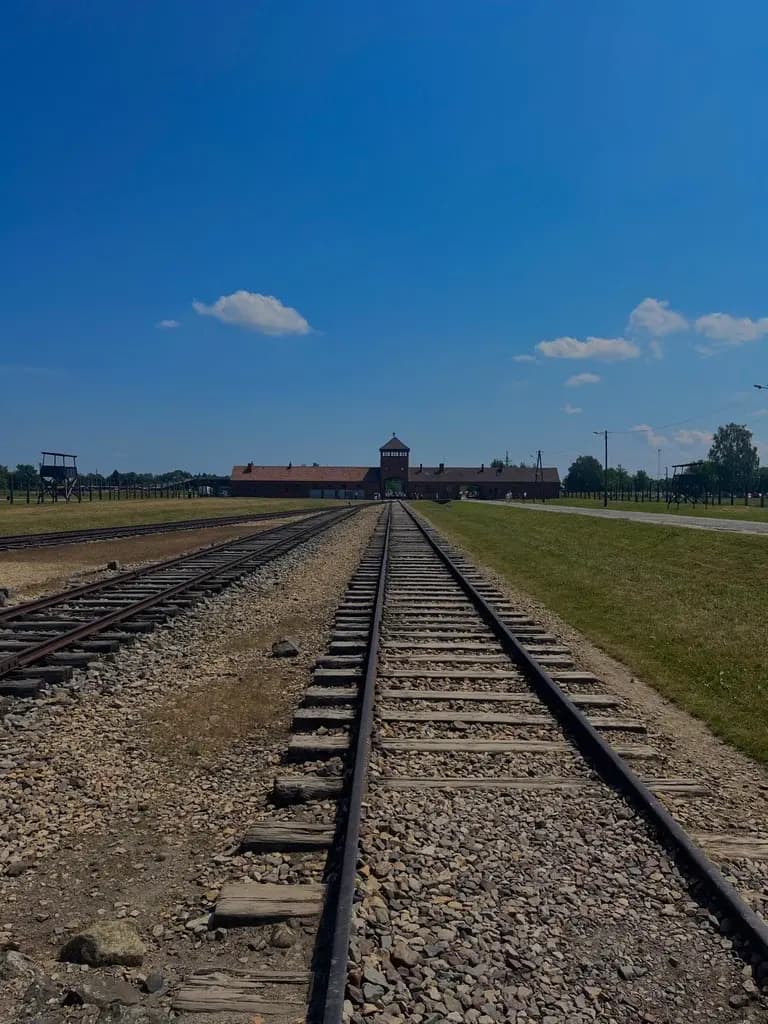
The Auschwitz-Birkenau Memorial, a former German Nazi concentration and extermination camp, lies about 1 hr 15 min by road from Kraków. It is one of the most important places of remembrance in Europe: a visit that calls for time and reflection. See our full practical guide: Visiting Auschwitz-Birkenau from Kraków.
If you'd rather have a less emotionally demanding third day, the Wieliczka salt mine is the big classic day trip from Kraków — see our practical guide to Wieliczka. *Note: we did not visit Wieliczka ourselves during our trip — this is a researched guide, without personal impressions.*
▸ Key questions at a glance
- Is Kraków worth visiting? Yes: the city packs a UNESCO-listed Old Town and a royal castle into a compact area, for a noticeably lower budget than a major Western European capital. Kraków is also the starting point for the Auschwitz-Birkenau Memorial, one of the most important places of remembrance in Europe.
- Best time to go: summer (June to August) brings pleasant, cooler temperatures than Southern Europe — but it's also peak season, so book your visit to the Auschwitz-Birkenau Memorial early.
Frequently asked questions
Is Kraków worth visiting?
Yes: the city packs a UNESCO-listed Old Town and a royal castle into a compact area, for a noticeably lower budget than a major Western European capital. Kraków is also the starting point for the Auschwitz-Birkenau Memorial, one of the most important places of remembrance in Europe.
What's the best time to visit Kraków?
Summer (June to August) brings pleasant temperatures, cooler than Southern Europe at the same time of year, but it's also peak tourist season — book your visit to the Auschwitz-Birkenau Memorial early.
How much time should you allow for Kraków and its surroundings?
Three days is a minimum given how much there is to see: the Old Town with the Main Market Square (Rynek Główny) and the Cloth Hall (Sukiennice), Wawel Royal Castle, and the Kazimierz Jewish quarter. Allow at least an extra half-day for the Auschwitz-Birkenau Memorial, which is not a place to visit lightly. With more time, the wider region easily fills a full week: the Wieliczka salt mine, a trip to Zakopane and the Tatra Mountains, or Katowice and the Energylandia theme park.