Things to Do in Kraków: What We Actually Saw
By Jérôme R · Visited in July 2026, completed with our research · Updated · How we work
What should you see in Kraków if you only have a few days? Here are the places we actually visited as a family (two adults and two teenagers) in July 2026: the Main Square and its Cloth Hall, Wawel Castle, the Jewish quarter of Kazimierz and Plac Nowy for a quick bite. On our first two days we did everything on foot, from a hotel a few minutes from the historic centre. Anything we didn't visit is flagged as such, with a short, sourced description, so you can make your own choices. A note on transparency: we spent two full days in Kraków when we arrived and one last evening at the end of our trip. This page doesn't claim to be exhaustive; for a day-by-day plan, see our "3 days" and "1 or 2 days" itineraries at the bottom of the page.
1. The Main Square (Rynek Główny)
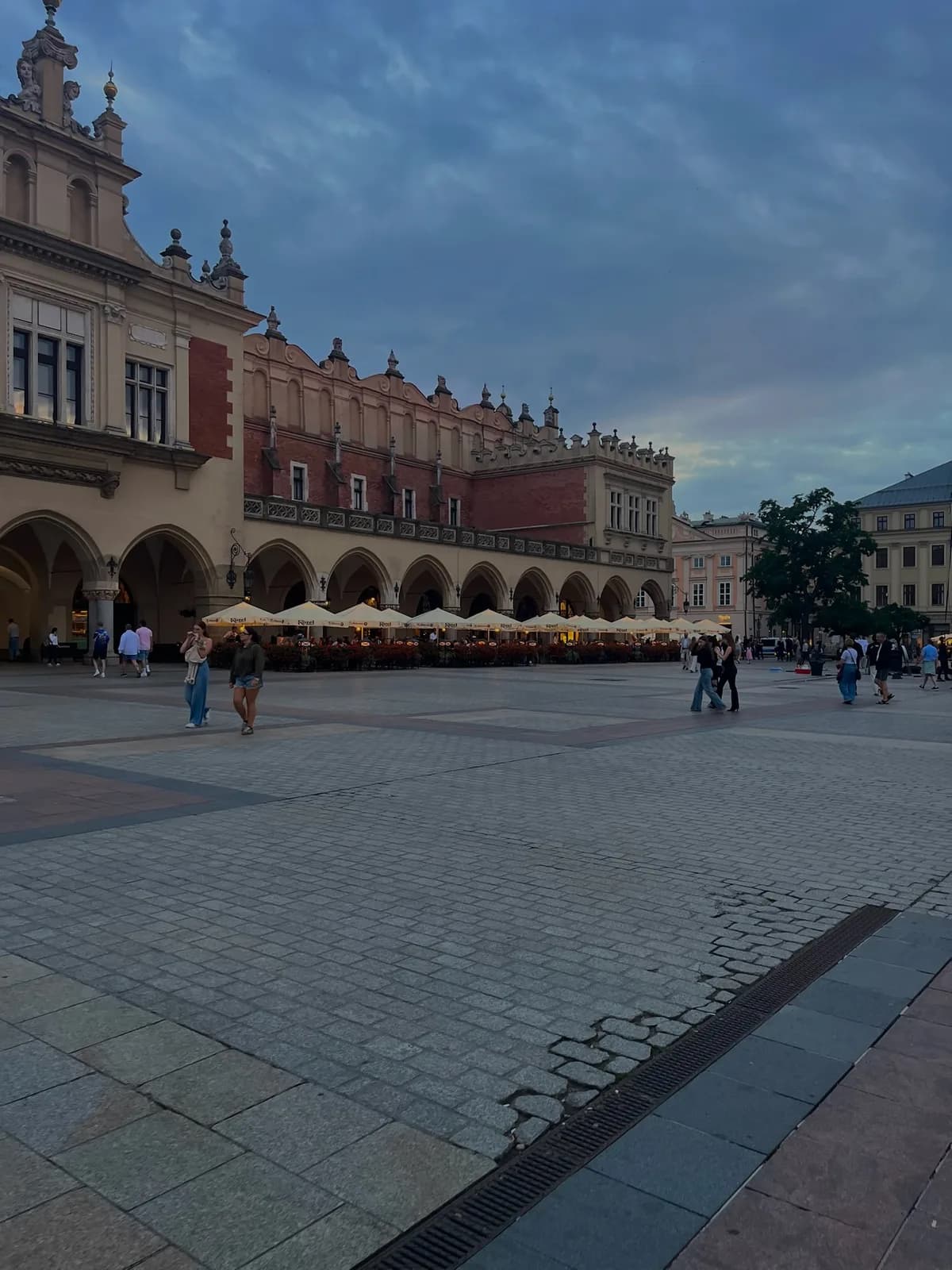
The heart of the Old Town was laid out in 1257, when Kraków received its town charter: a square just over 200 metres on each side, one of the largest medieval squares in Europe. Kraków's historic centre was among the very first sites added to the UNESCO World Heritage List, in 1978.
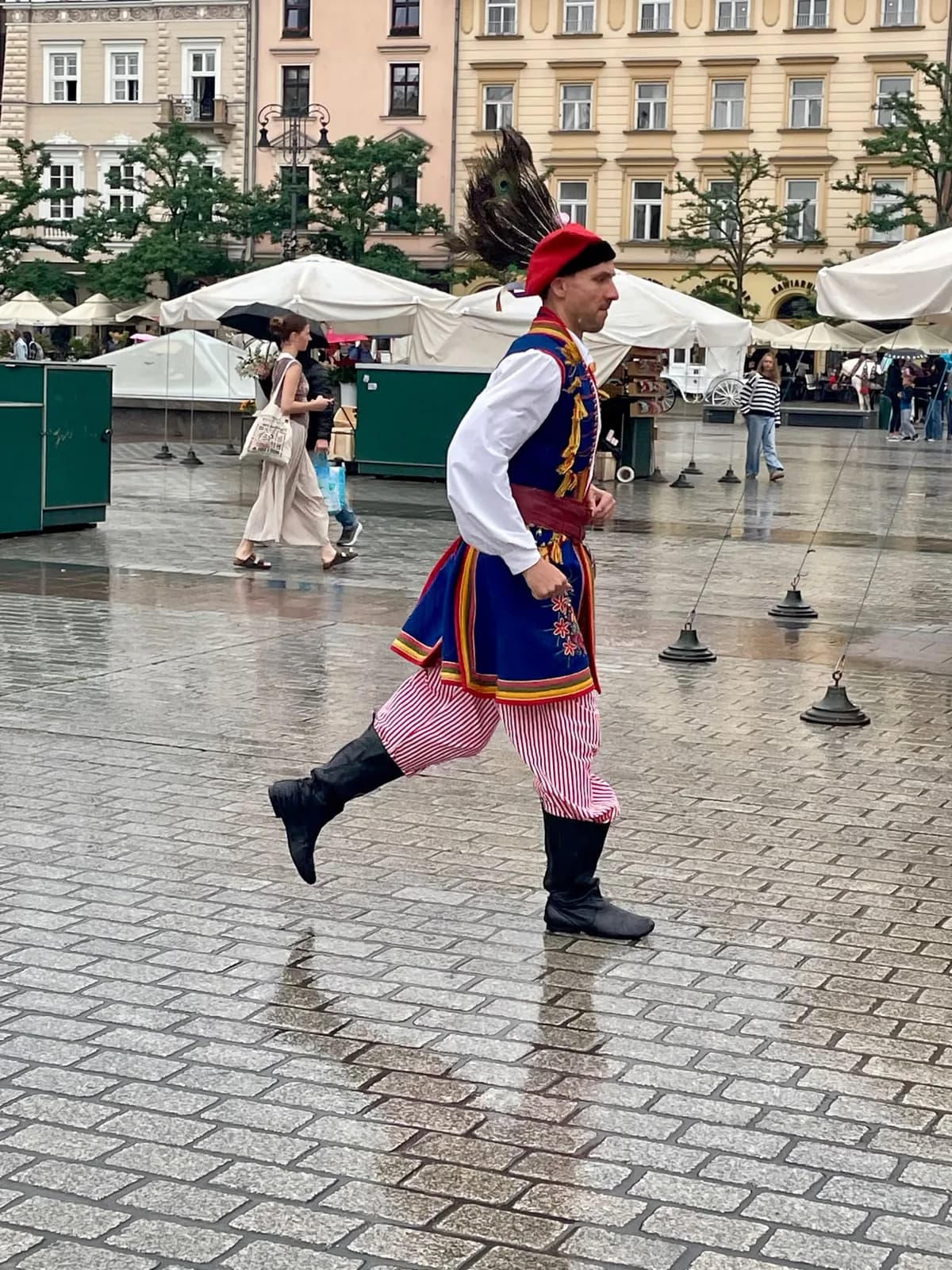
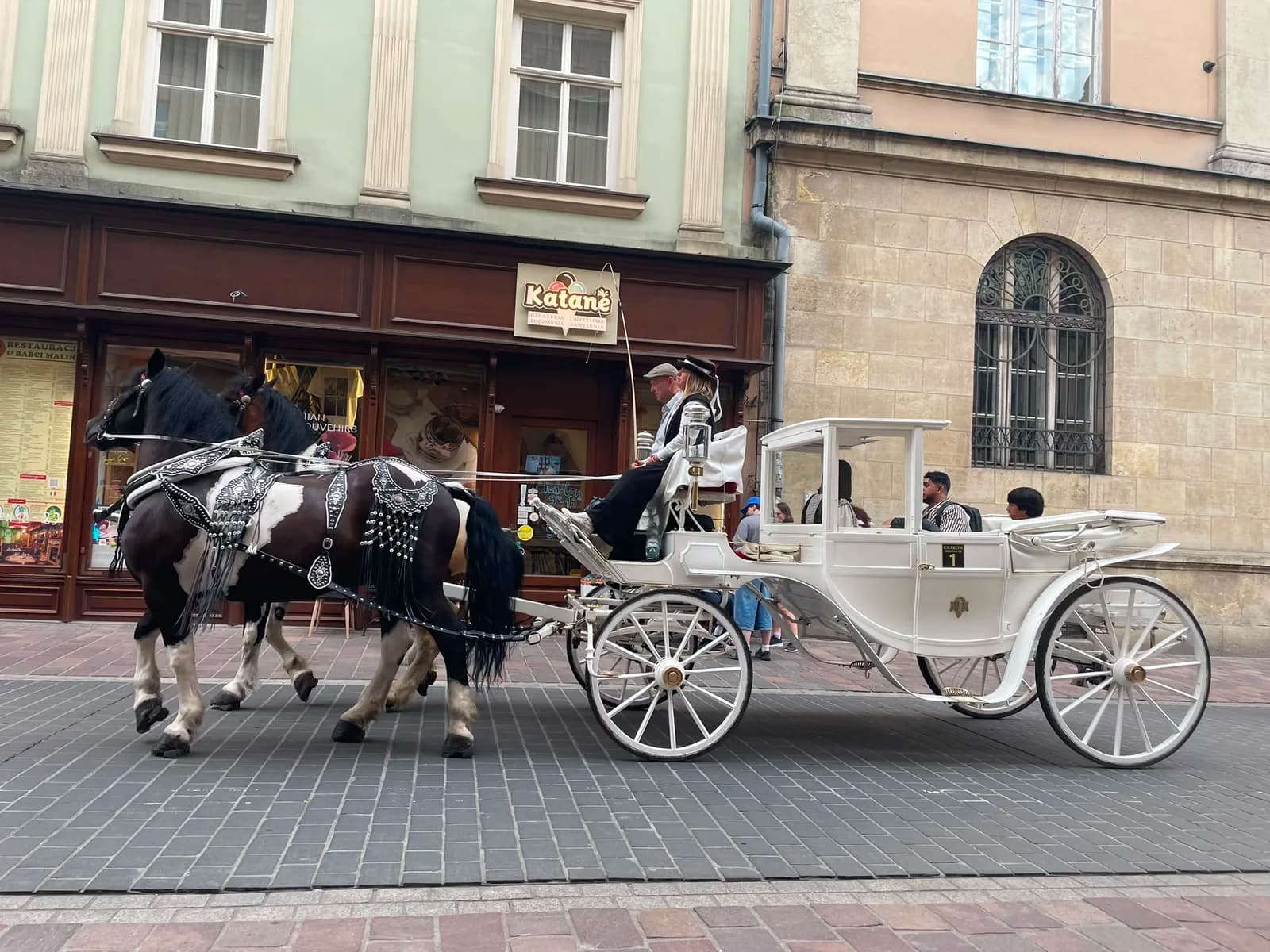
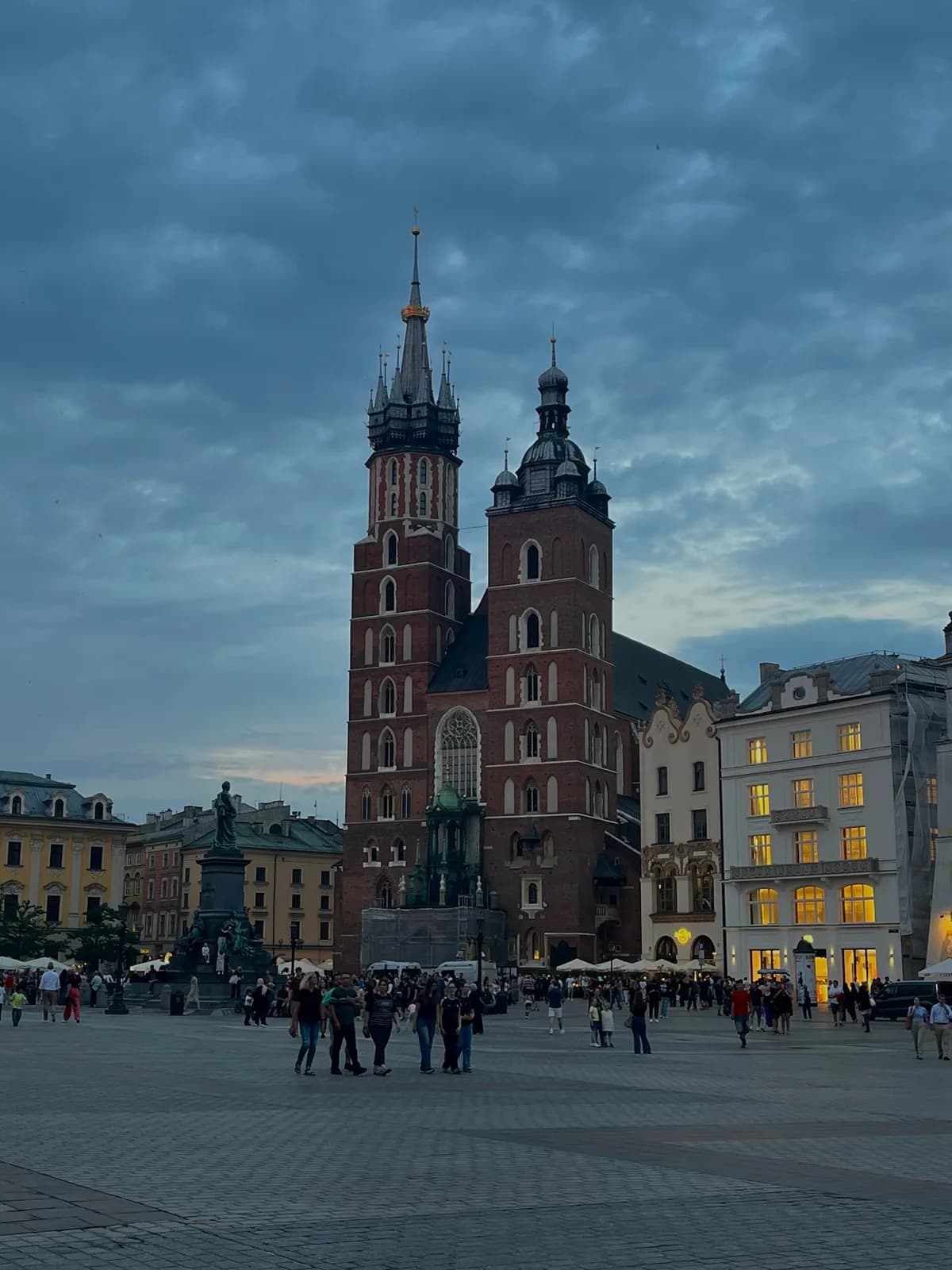
True story, July 2026: we walked there on our first day under a grey, almost rainy sky — a real relief after the heatwave we'd left behind in France. The square is huge and lined with café terraces; we came across a dancer in traditional costume and the horse-drawn carriages that tour the Old Town. *For the record: we didn't take a carriage ride.*
2. The Cloth Hall (Sukiennice)
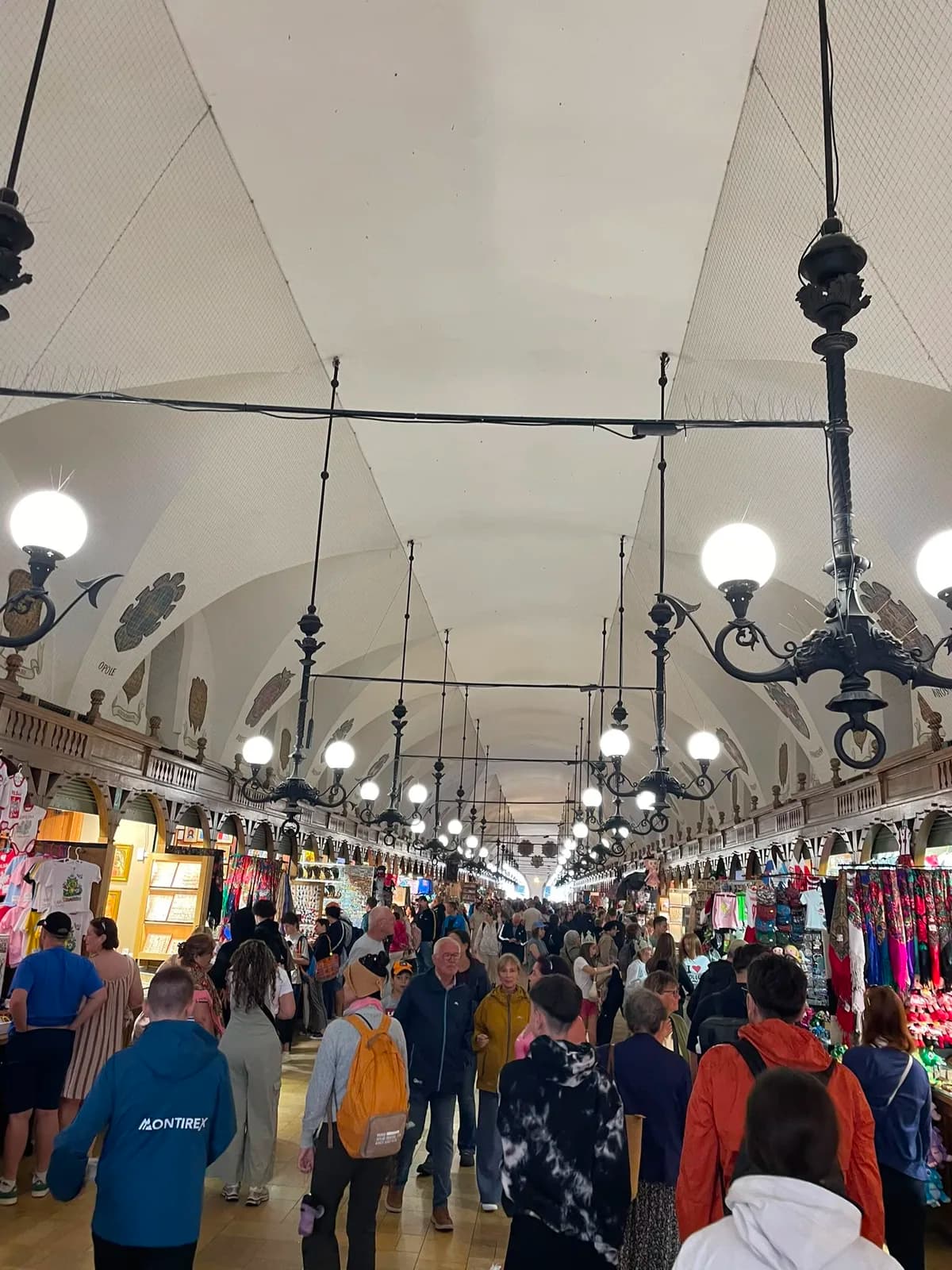
In the middle of the square, the long Cloth Hall has been the city's trading centre for centuries. On the ground floor, a covered arcade is lined with souvenir and craft stalls.
True story, July 2026: we walked through it on our first afternoon. It gets busy, but it's hard to miss — and a good place to shelter from a shower. *We didn't visit the Gallery of 19th-Century Polish Art upstairs (National Museum) or the underground museum beneath the square (Rynek Underground).*
3. St Mary's Basilica and its hejnał
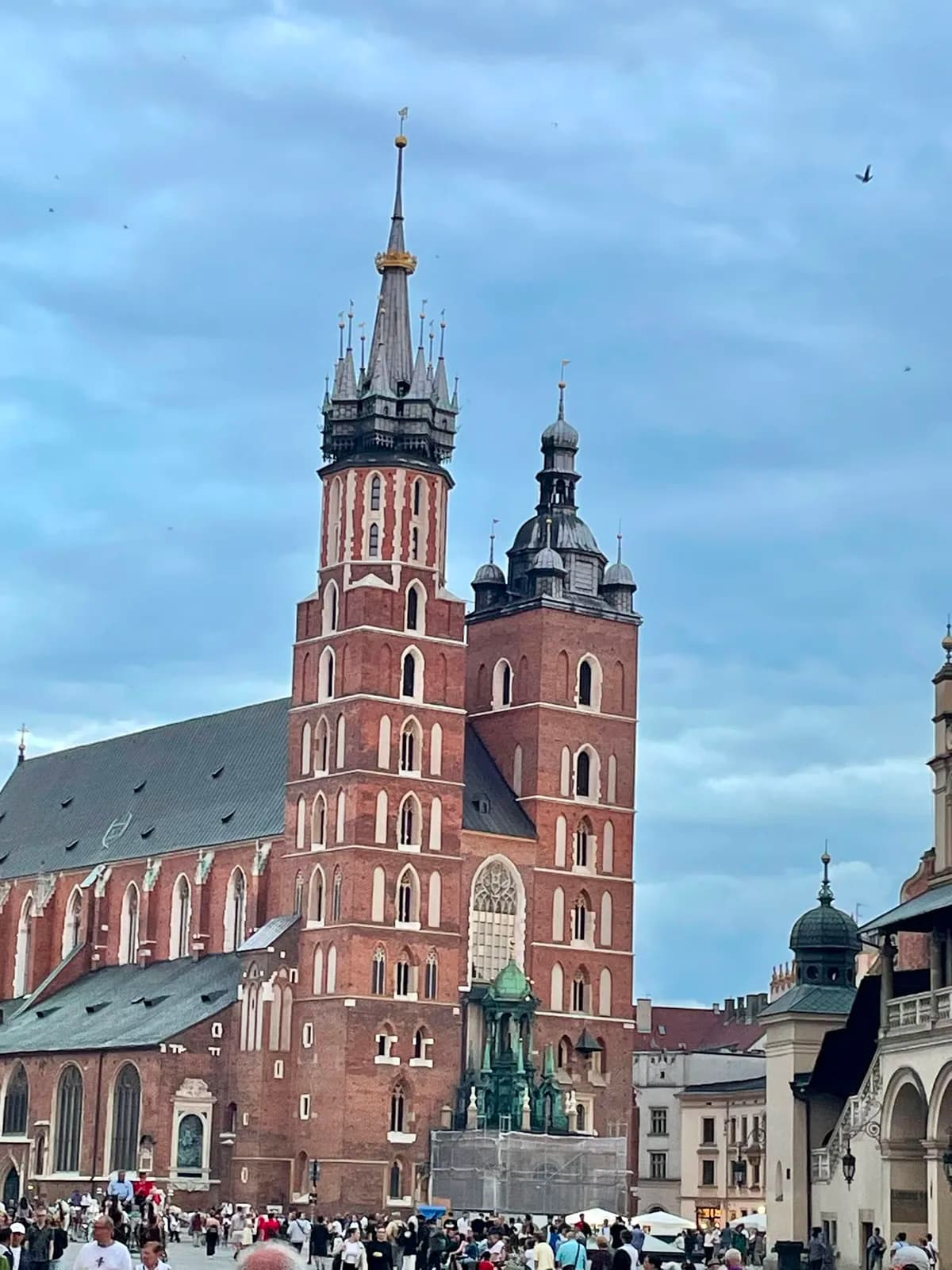
The two unequal towers of St Mary's Basilica (Mariacki) dominate the square. Every hour, from the taller one (81 metres), a trumpeter plays the hejnał, a tune that stops abruptly halfway through. Inside, the altarpiece carved by Veit Stoss (1477–1489) is 13 metres high and 11 metres wide, with more than 200 figures; from Monday to Saturday its panels are opened at 11:50. According to the city's culture office, tourist entry costs 15 zł (check before you go).
A note on transparency: we only saw the basilica from the outside, by day and at dusk, without going in: the details about the interior come from official sources, not from our own visit.
4. Wawel Royal Castle
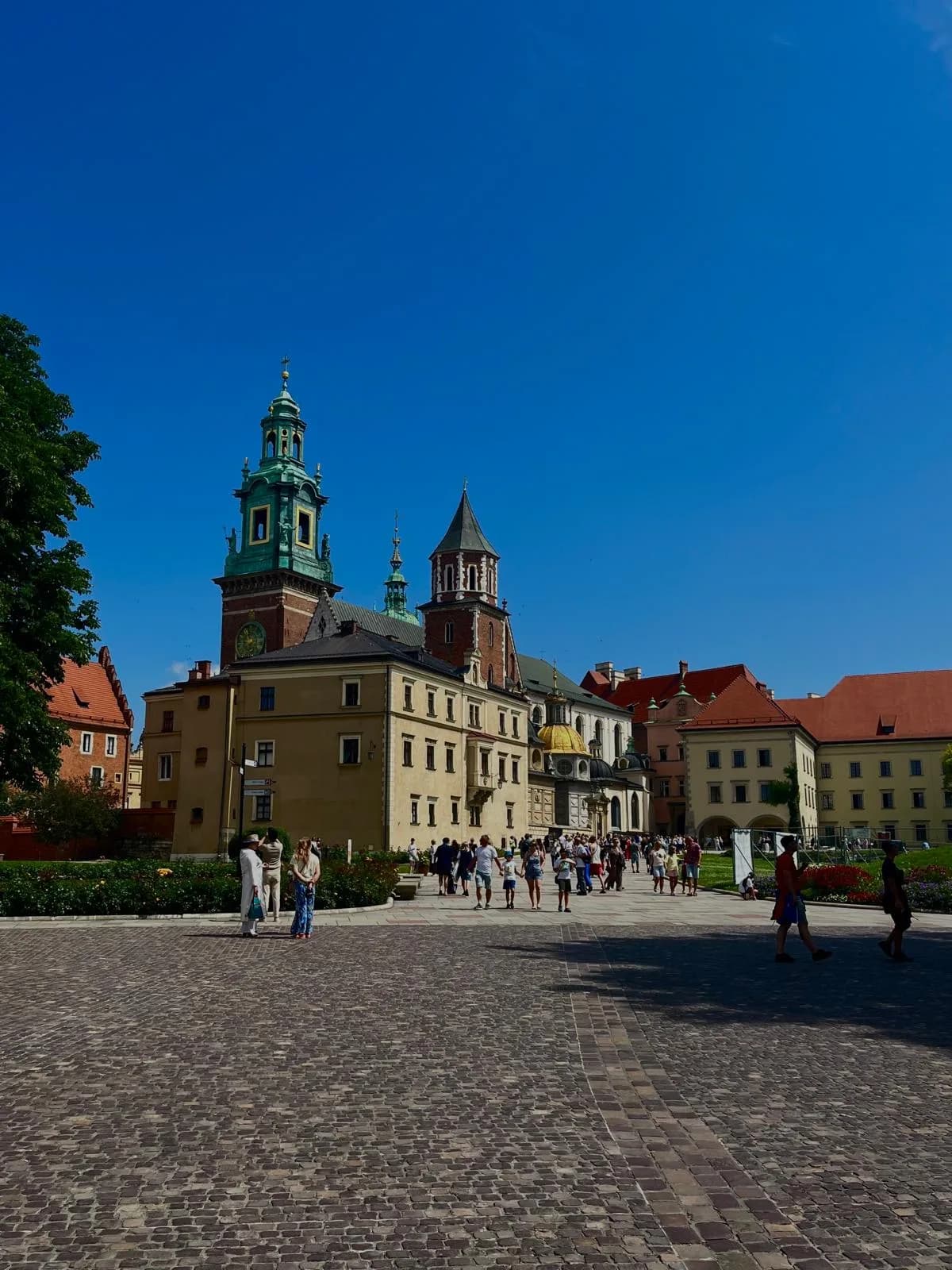
On the hill above the Vistula, Wawel Castle is the one visit not to skip. Entry to the grounds and courtyards is free; you pay for the individual exhibitions you choose (armoury, porcelain, royal apartments, underground archaeology).
True story, July 2026: we walked there in the late morning in bright sunshine, and it wasn't crowded. The staff at the entrance explain the ticket combinations and prices really well, depending on which routes you pick (and whether you have children with you) — but only in Polish or English. We each took three tickets: the castle underground (35 zł), the castle's first floor (43 zł) and the Dragon's Den (10 zł) — 352 zł for the four of us (about €82), at the reduced rate shown on our receipt. Allow 1.5 to 2 hours for the castle. Our route and detailed verdict are in our full visit of Wawel Castle.
5. The Dragon's Den and the fire-breathing statue
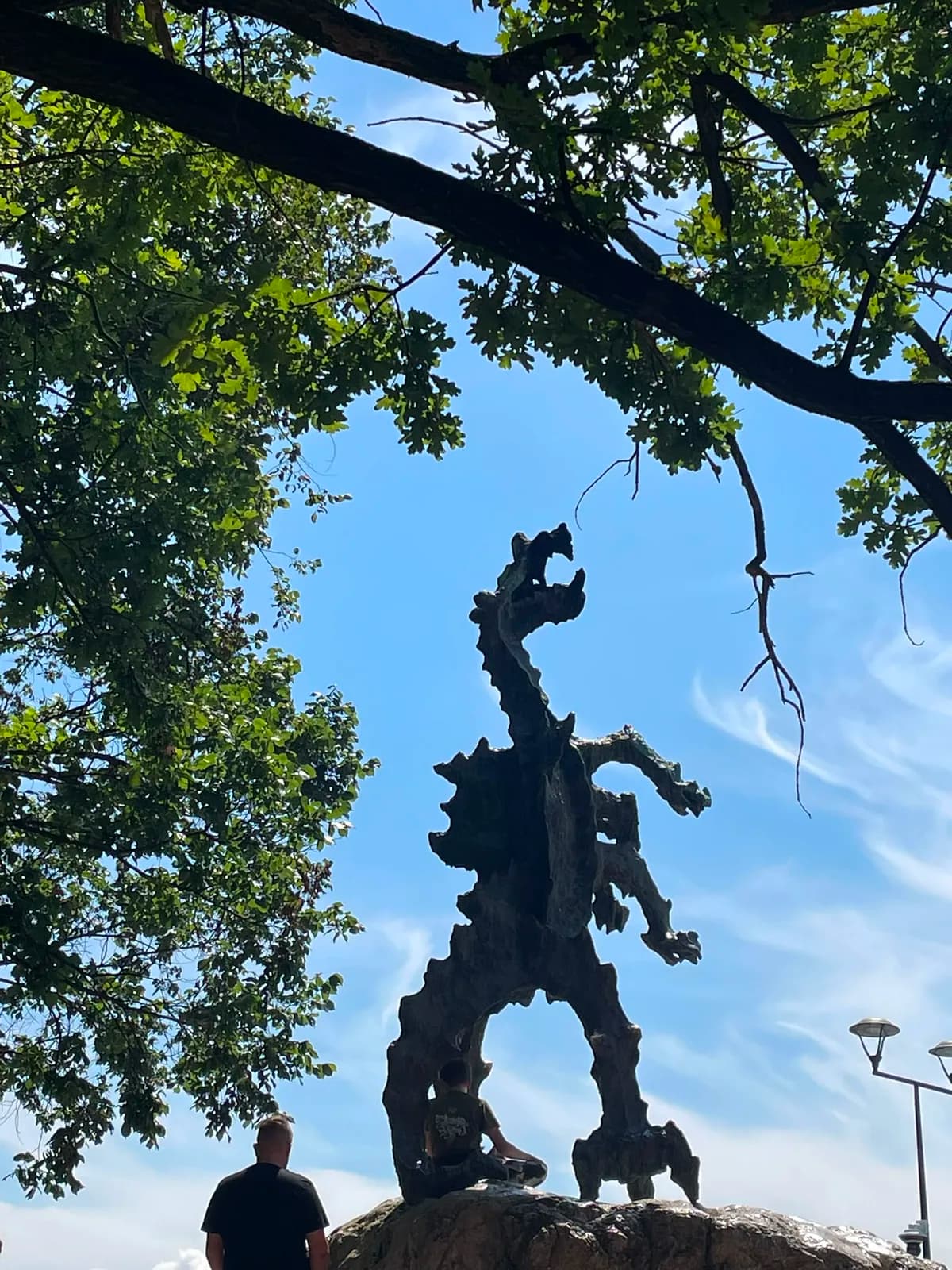
As you leave the castle, you can go down into the Dragon's Den (Smocza Jama), linked to Kraków's founding legend.
True story, July 2026: honestly, we were disappointed: lots of steps down a narrow passage, a damp cave and, at the end, no real dragon — just a bit of lighting. On the plus side it's cool on a hot day, and at the exit, on the banks of the Vistula, the iron dragon statue that breathes fire was a hit with our teenagers. If you're short on time, skip the cave and go straight to the statue.
6. Kazimierz, the Jewish quarter
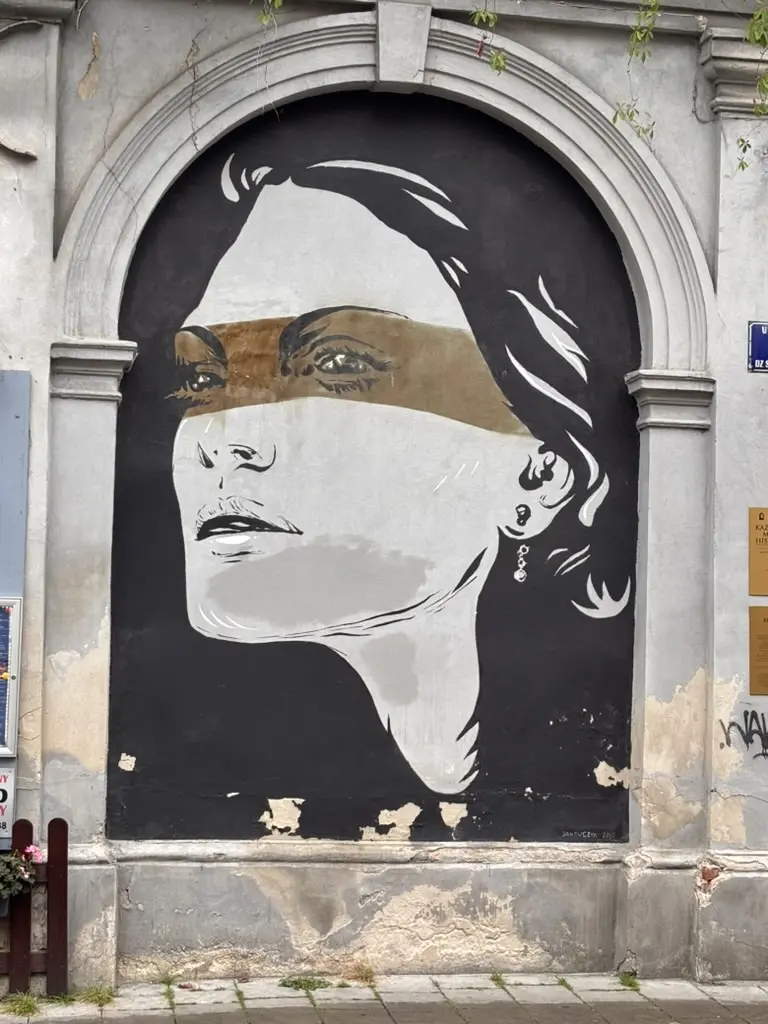
Kazimierz was a separate town, founded in 1335 by King Casimir the Great, before becoming Kraków's Jewish quarter for centuries. Today it's the city's liveliest district: synagogues, courtyards, street art, cafés and bars.
True story, July 2026: we wandered through it on our first afternoon and came back on our last evening in Poland. We strolled its narrow streets, past the gate of the Remuh Synagogue and the big street-art murals, such as the one on Kupa Street. It's the district whose atmosphere changes most between day and night.
7. Plac Nowy and its zapiekanki
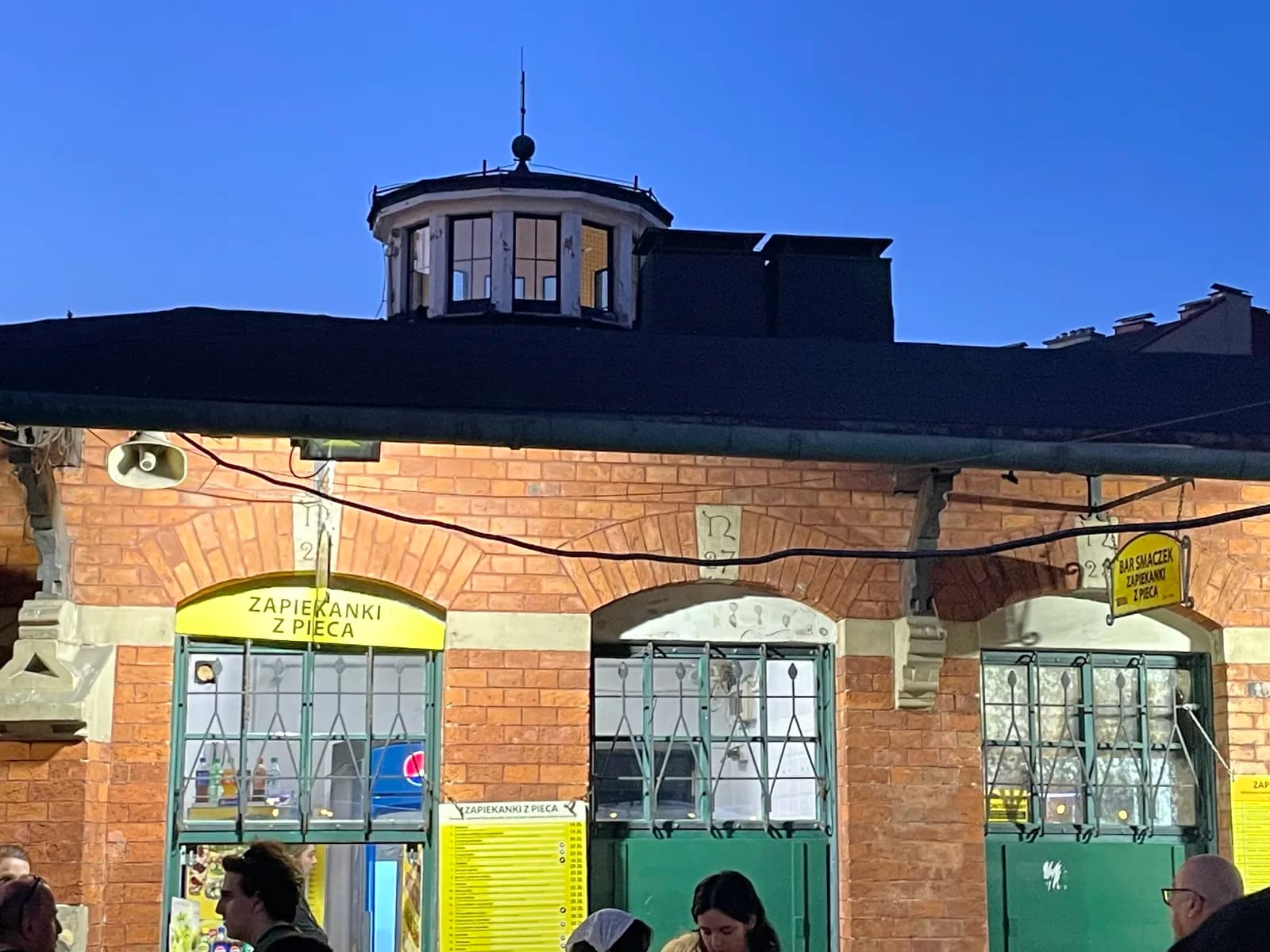
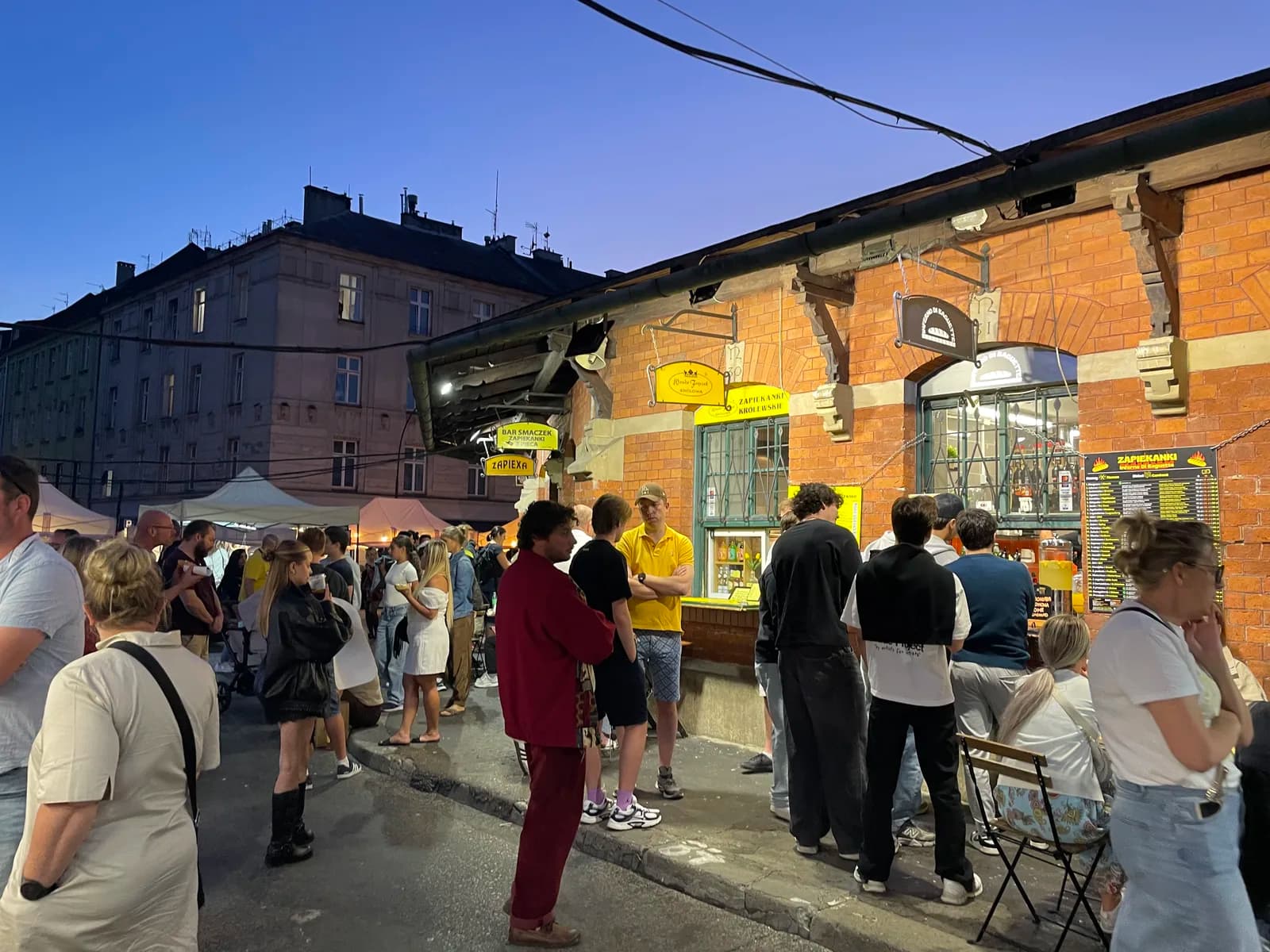
In the centre of Kazimierz, Plac Nowy is built around the Okrąglak, a round pavilion from 1900 that once housed the ritual slaughter of poultry. Today its hatches serve street food, starting with the zapiekanka, a toasted half-baguette with toppings that Poles jokingly call "Polish pizza".
True story, July 2026: we had dinner there on our last evening: a packed square, queues at the hatches, outdoor tables and a tray of pierogi eaten standing up. A great way to end the trip. Our other places to eat in Kraków are on our where to eat in Kraków page.

8. The "Schindler's List" passage and the courtyards of Kazimierz
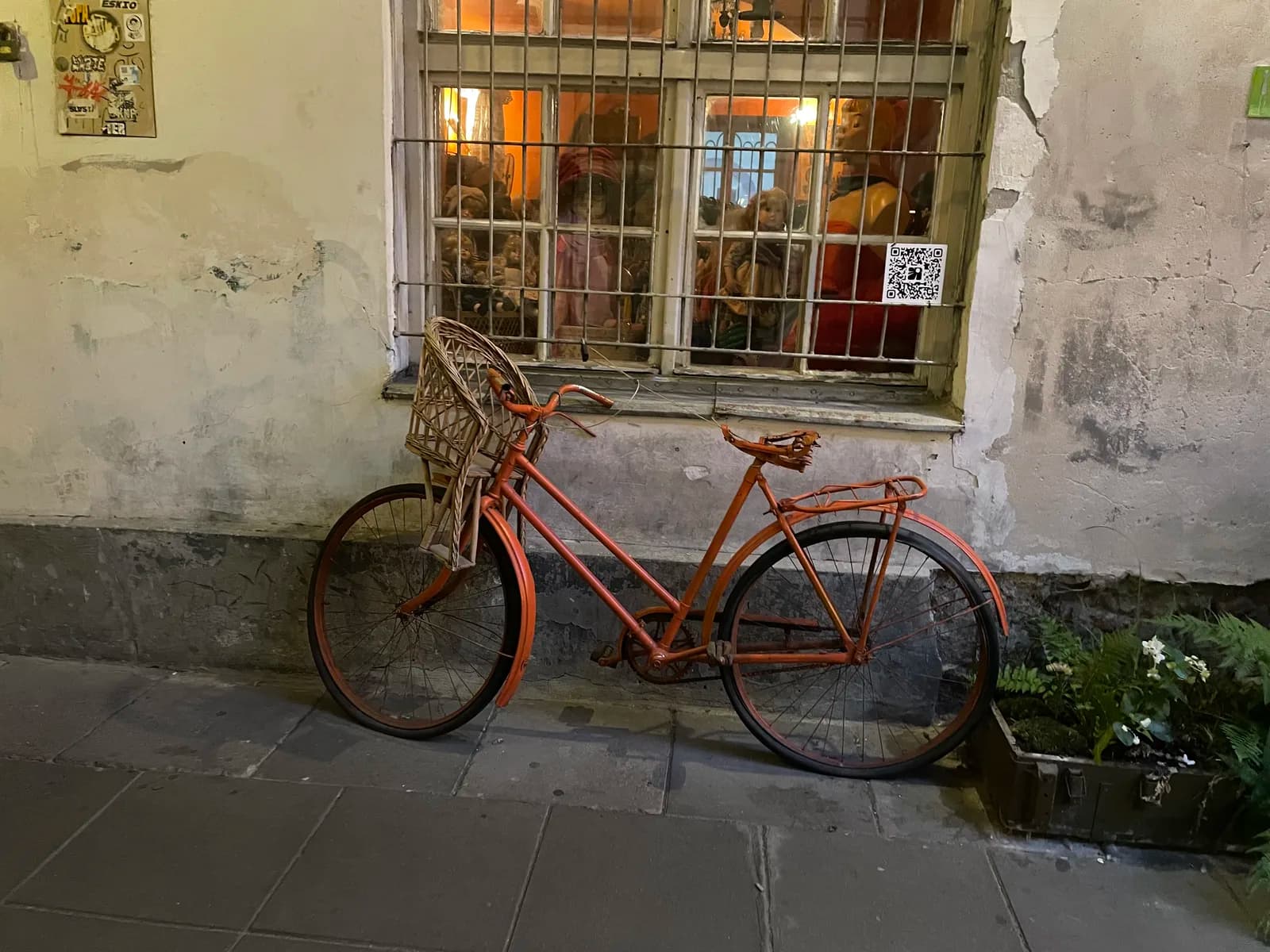
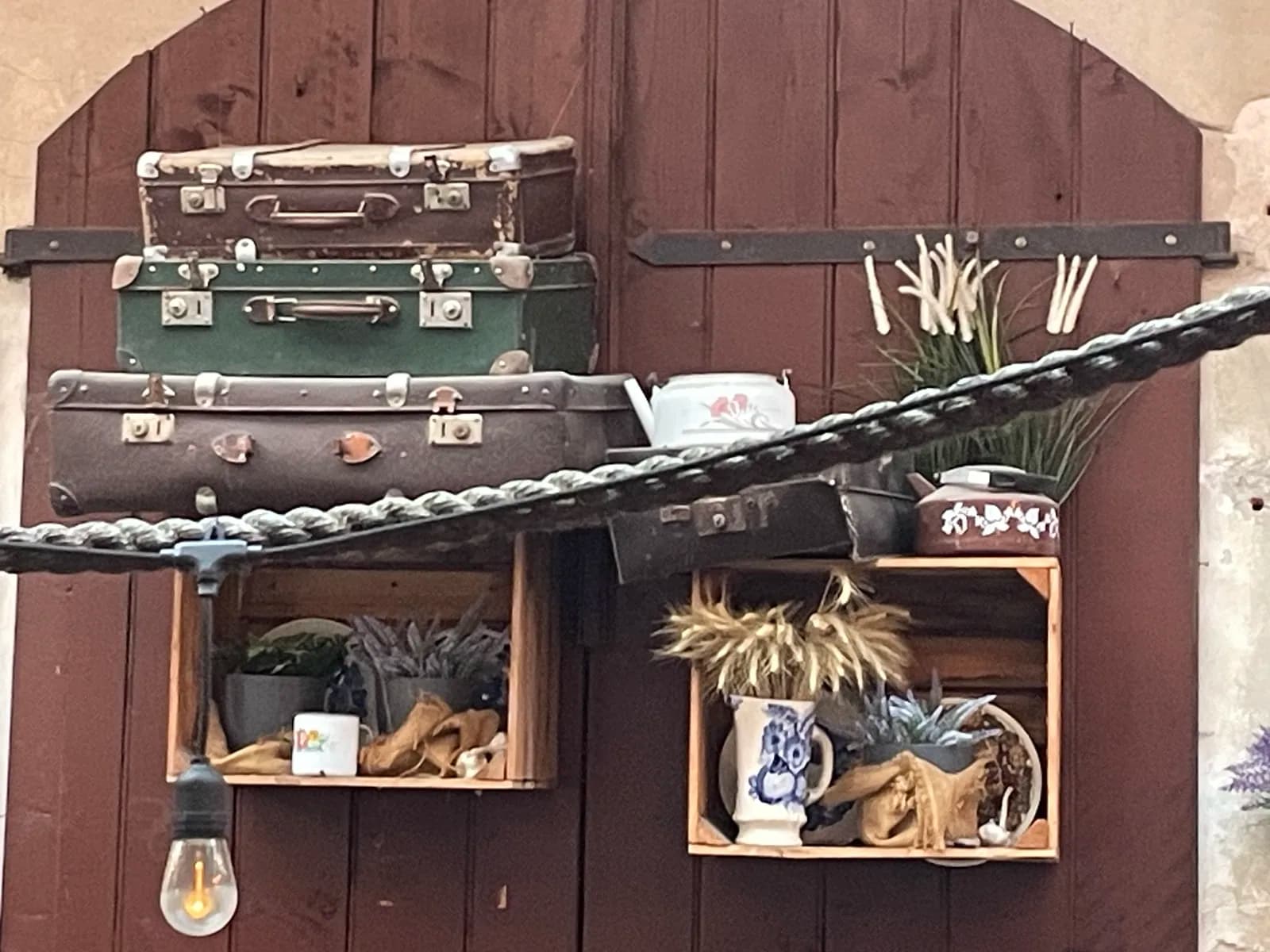
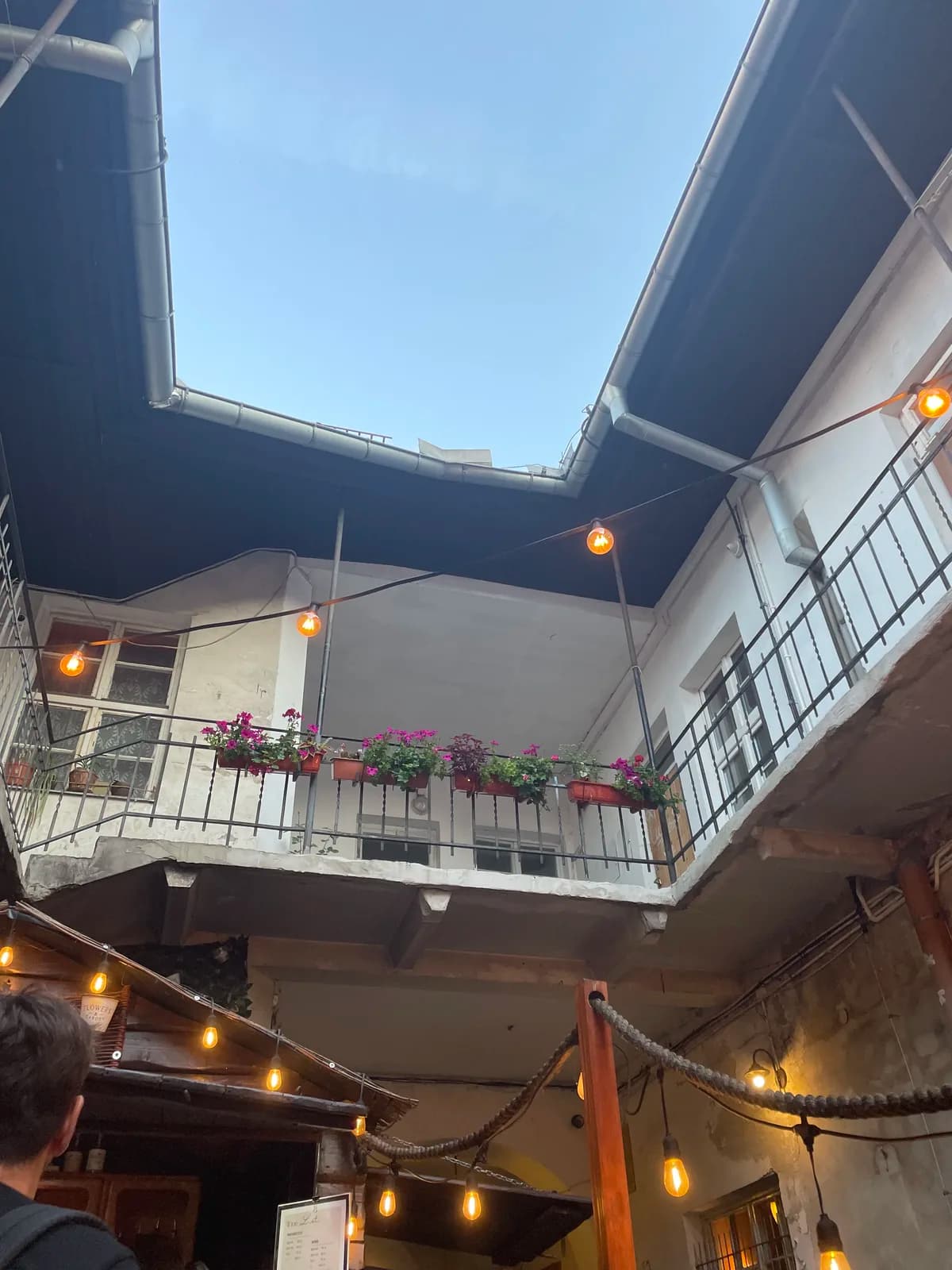
True story, July 2026: on our last evening we went to find the alley with the mural recalling the filming of Steven Spielberg's *Schindler's List*, partly shot in Kazimierz. Nearby, some courtyards are decorated with old suitcases, utensils and lanterns, and we spent a long time photographing them.
*Not to be confused with Oskar Schindler's Factory, now a museum, which we didn't visit (see below).*
What we didn't visit (but is worth the detour)
A note on transparency: the places below aren't part of our own experience. We mention them because they appear on every serious list of things to do in Kraków, with a short description based on official sources.
Around Kraków
Kraków is also a base for several day trips: the Wieliczka Salt Mine (which we didn't visit), the Energylandia theme park (where we spent a family day) or the Tatra Mountains around Zakopane. You'll find them all on our day trips from Kraków page.
Around 1 hour 15 minutes away by road is the Auschwitz-Birkenau Memorial. It is not a visit like any other: it is a place of remembrance that requires at least half a day and time for reflection. We give it a page of its own, visiting Auschwitz-Birkenau from Kraków, with practical information and a link to the Memorial's official website.
How many days do you need in Kraków?
In one day you can see the Main Square, the Cloth Hall and Wawel at a brisk pace. With two days you add Kazimierz without rushing, including an evening on Plac Nowy — which is what we did. With three days you can devote a full day to the Auschwitz-Birkenau Memorial. Our detailed plans: one or two days in Kraków and our 3-day Kraków itinerary.
See also
Frequently asked questions
What are the must-see sights in Kraków?
The Main Square (Rynek Główny) with the Cloth Hall and St Mary's Basilica, Wawel Castle and the Jewish quarter of Kazimierz, including an evening on Plac Nowy. These are the places we visited and would recommend for a first trip.
How many days do you need to see Kraków?
Two days are enough for the historic centre, Wawel and Kazimierz without rushing. Add a third day if you want to visit the Auschwitz-Birkenau Memorial, which needs at least half a day plus around 1 hour 15 minutes on the road each way.
Can you explore Kraków on foot?
Yes: the Old Town, Wawel and Kazimierz are close together. On our first two days we did everything on foot from a hotel a few minutes from the historic centre. Trams cover the rest of the city.
Is the Dragon's Den worth it?
In our view, not really: lots of steps, a damp cave and no real dragon. The fire-breathing iron statue at the exit, by the Vistula, is far more popular with children. If you're short on time, prioritise the castle.