Słowiński National Park: the Shifting Dunes of Łeba
By Jérôme R · Visited in July 2026 · Updated · How we work
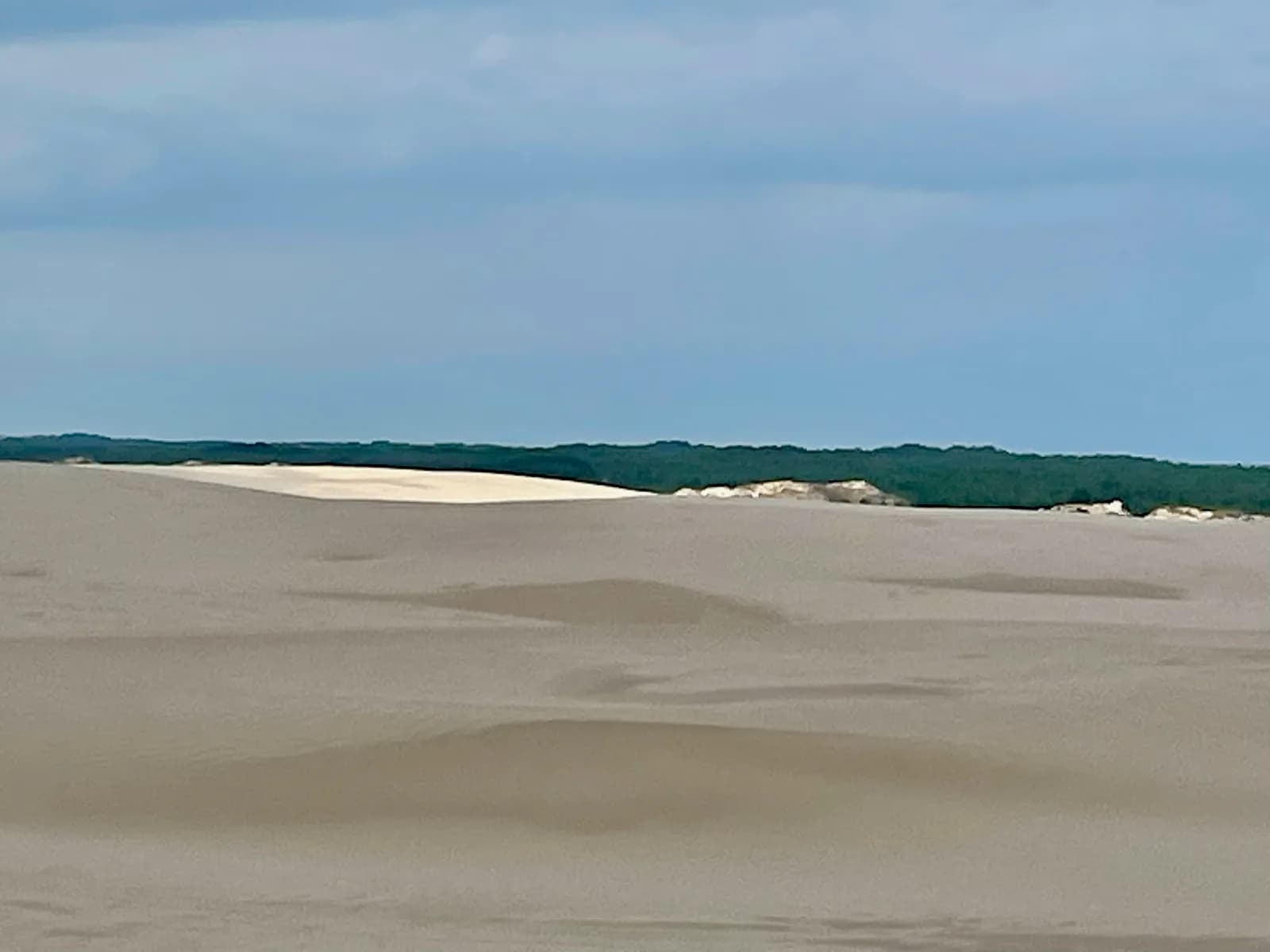
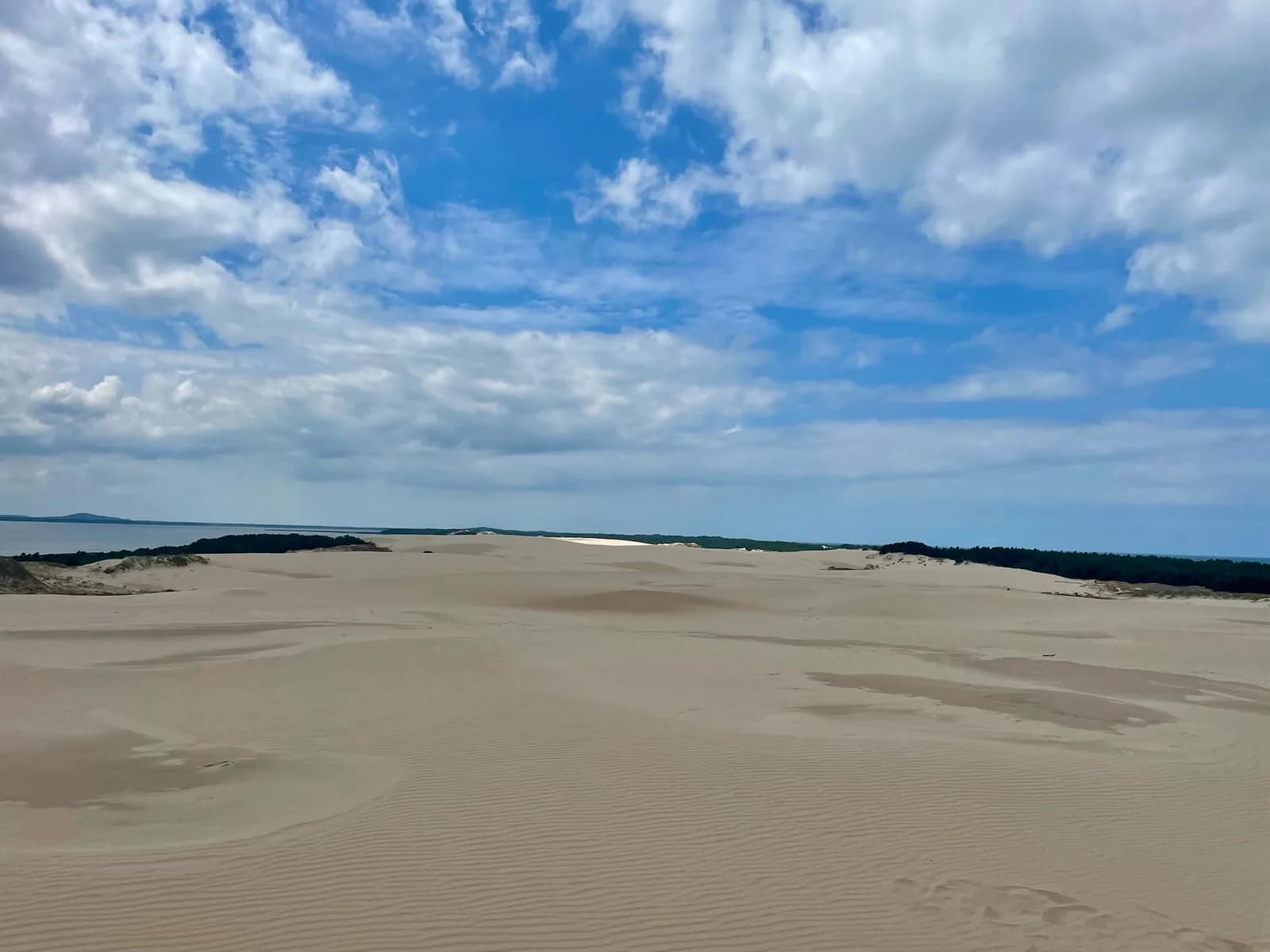
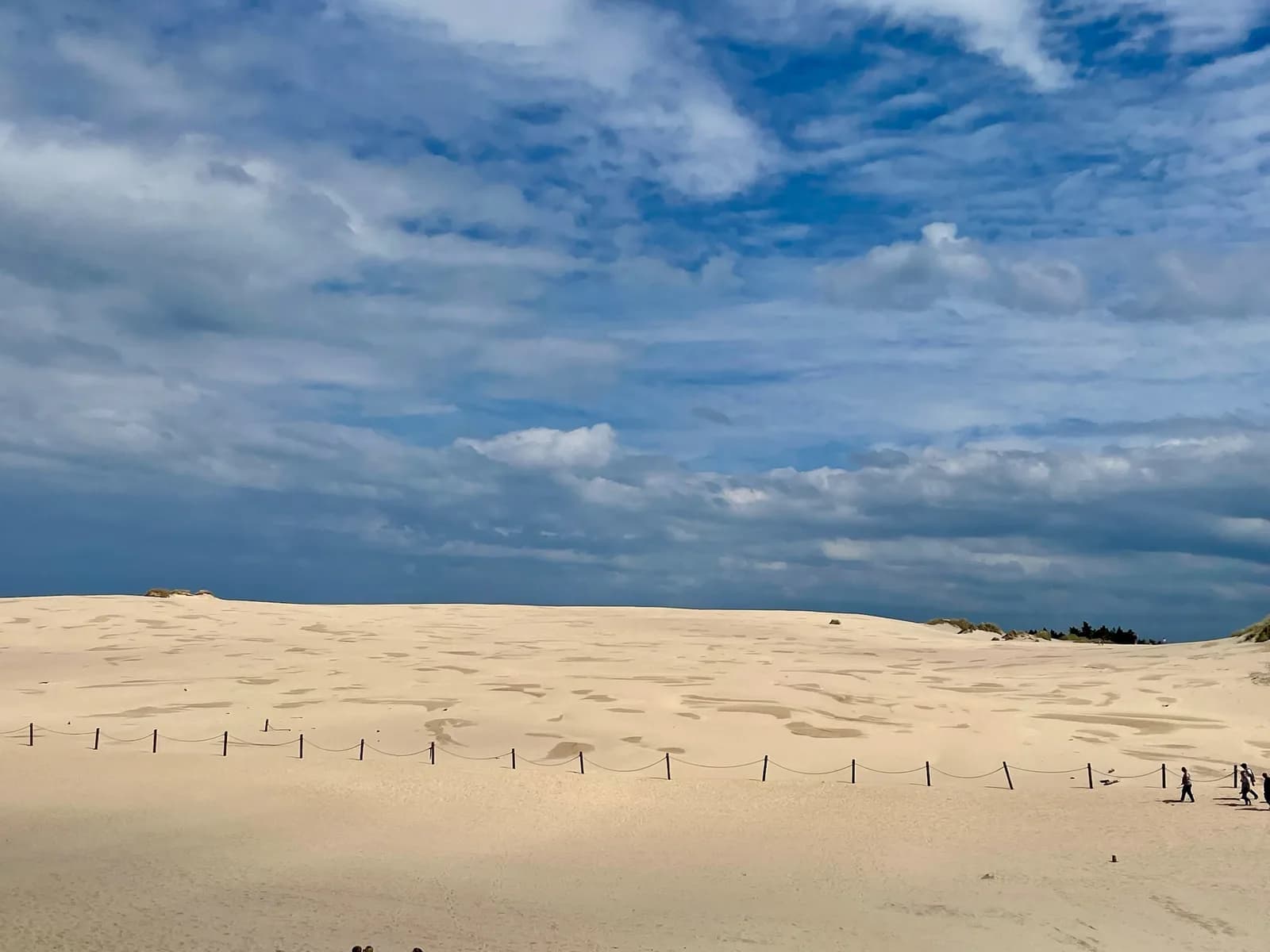
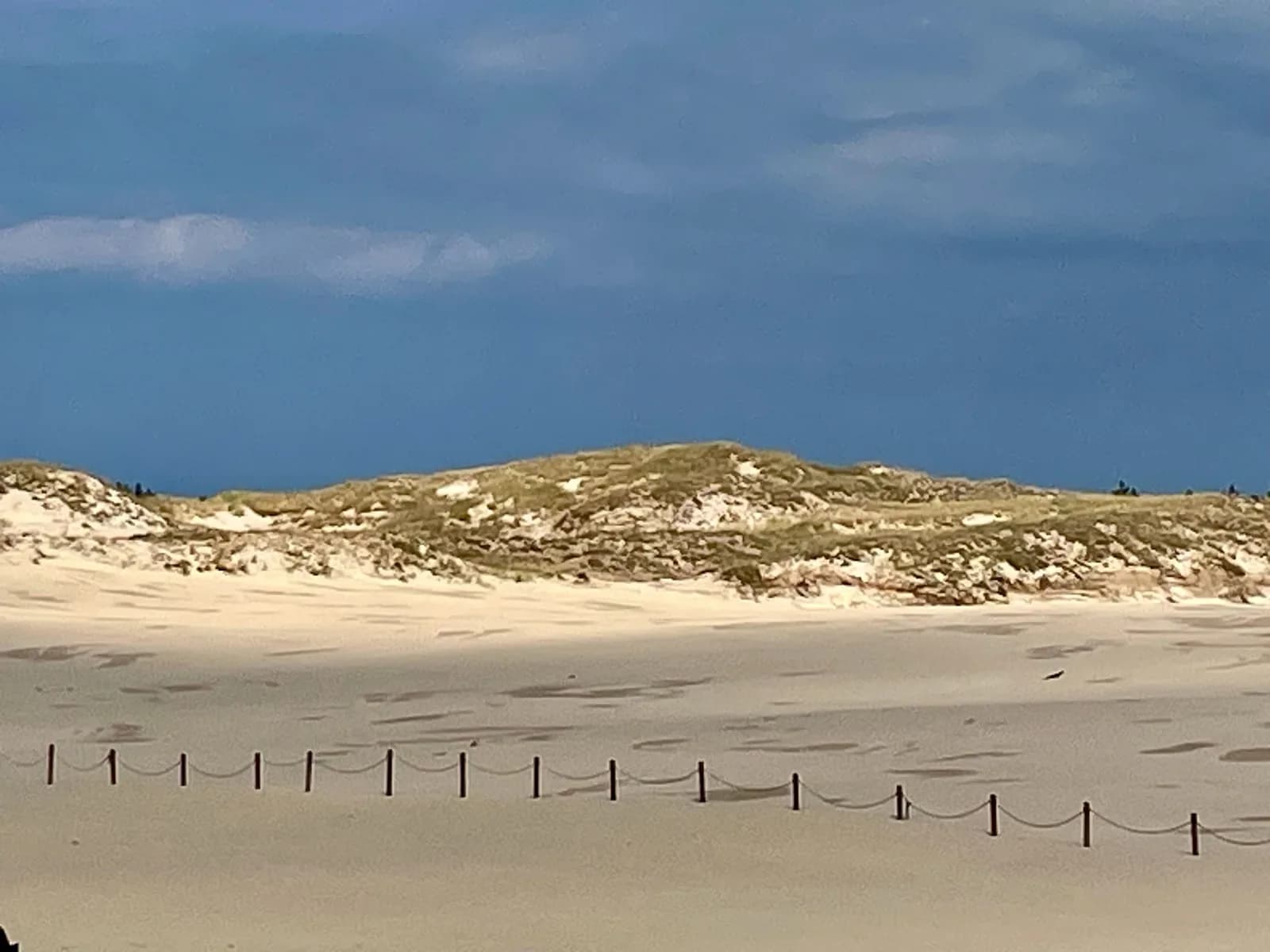
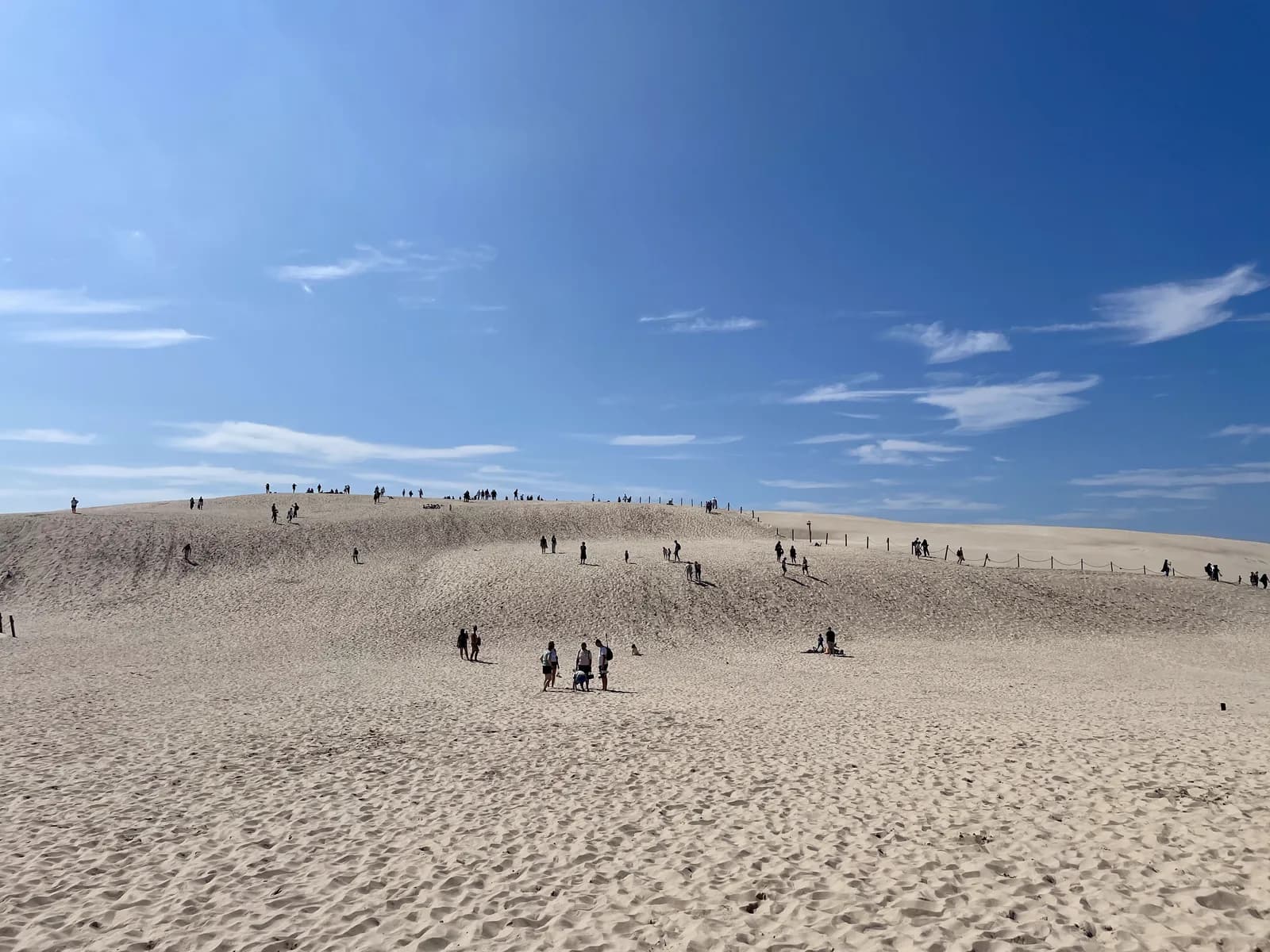
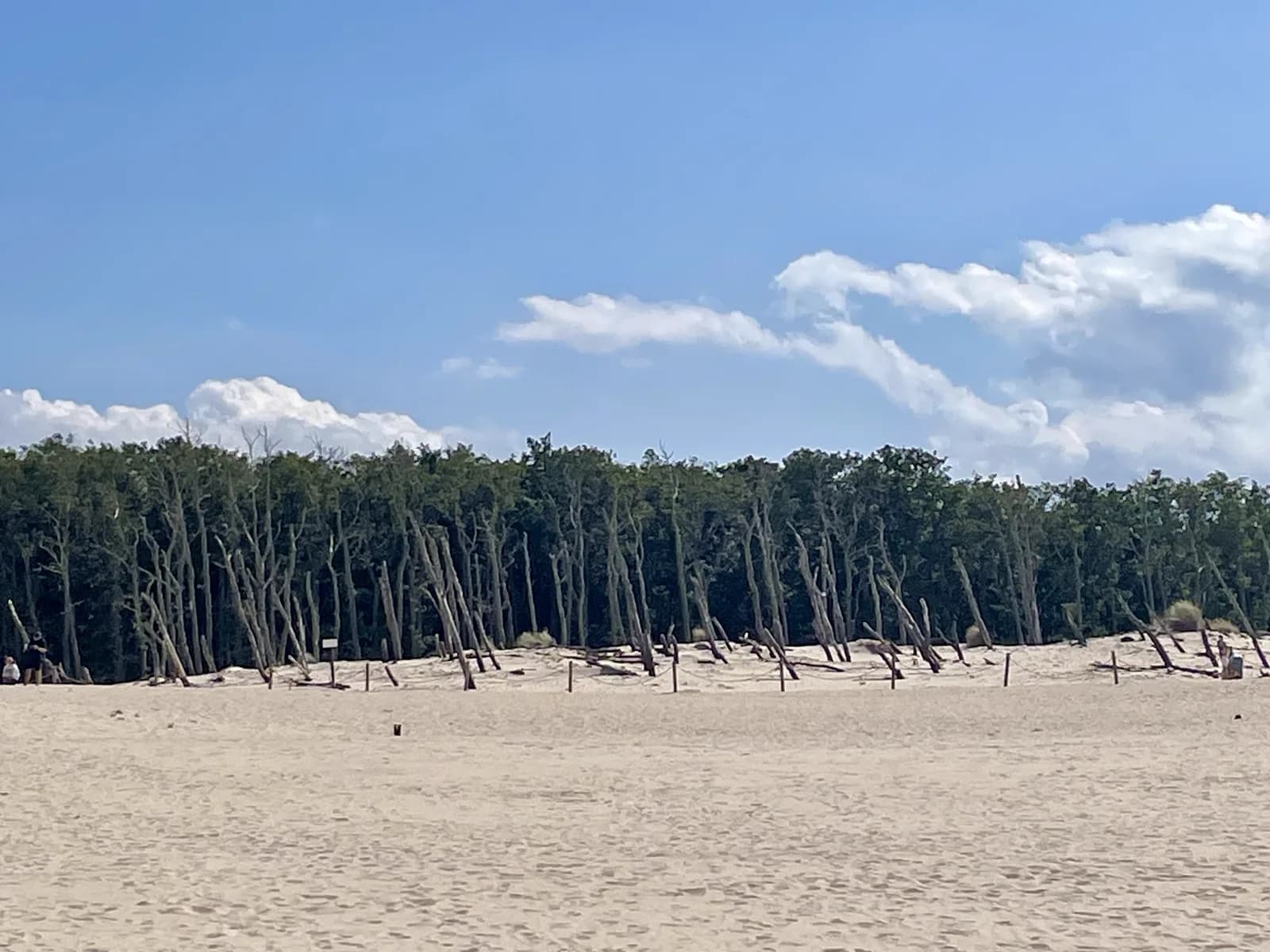
Near Łeba, on the Polish Baltic coast, lies Słowiński National Park, a UNESCO biosphere reserve and Ramsar site — a protected natural area famous for its shifting dunes, among the largest in Europe. We discovered it in two stages: a long walk from our accommodation, then a bike ride to the dunes themselves.
The shifting dunes, by bike
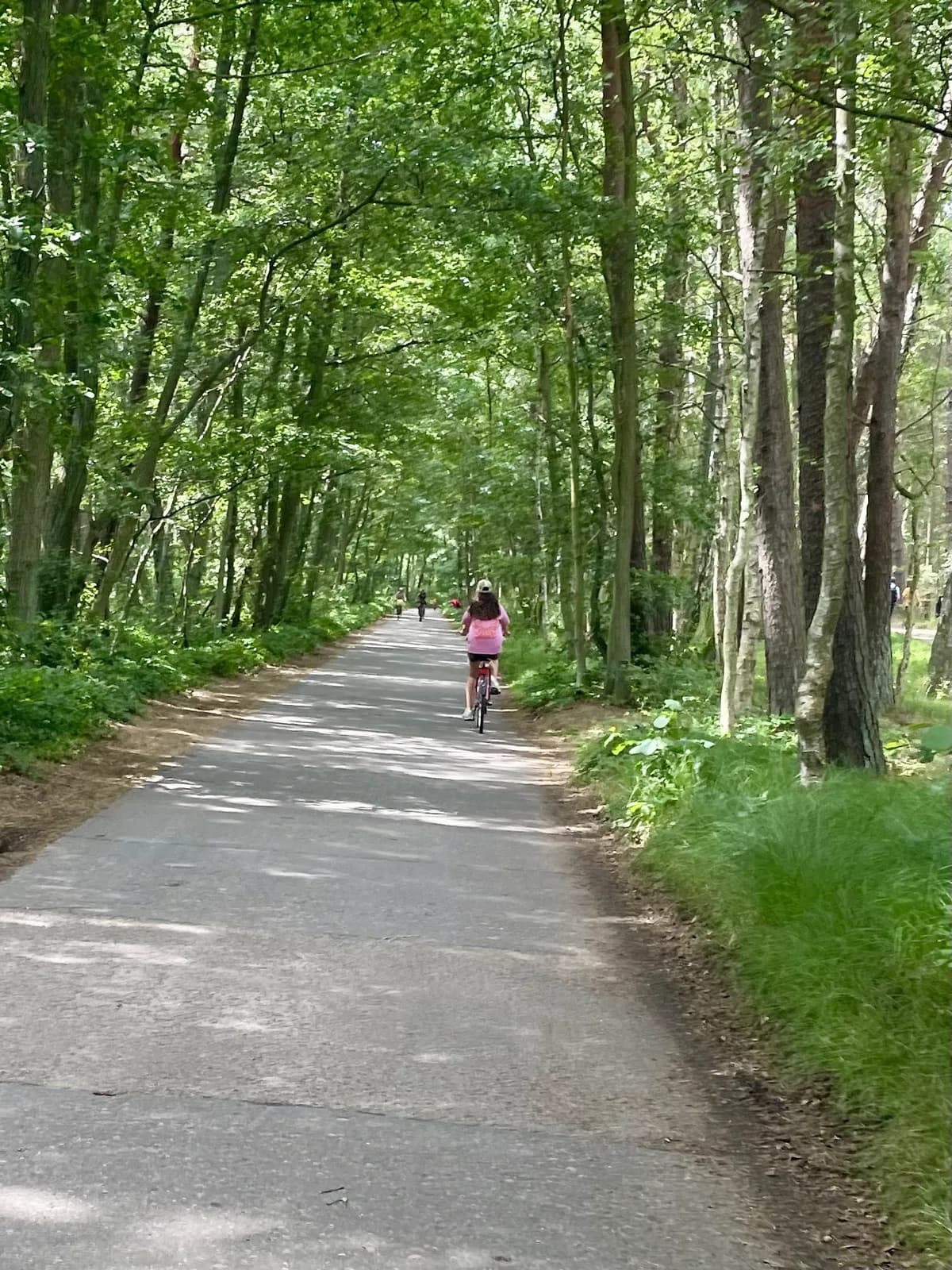
True story, July 2026: a few days later, we hired bikes directly from our accommodation (around 10 to 20 zł per bike for half a day) to reach Słowiński National Park by bike — a very pleasant ride that reminded us a lot of cycling around Cap Ferret or the Dune du Pilat in France.
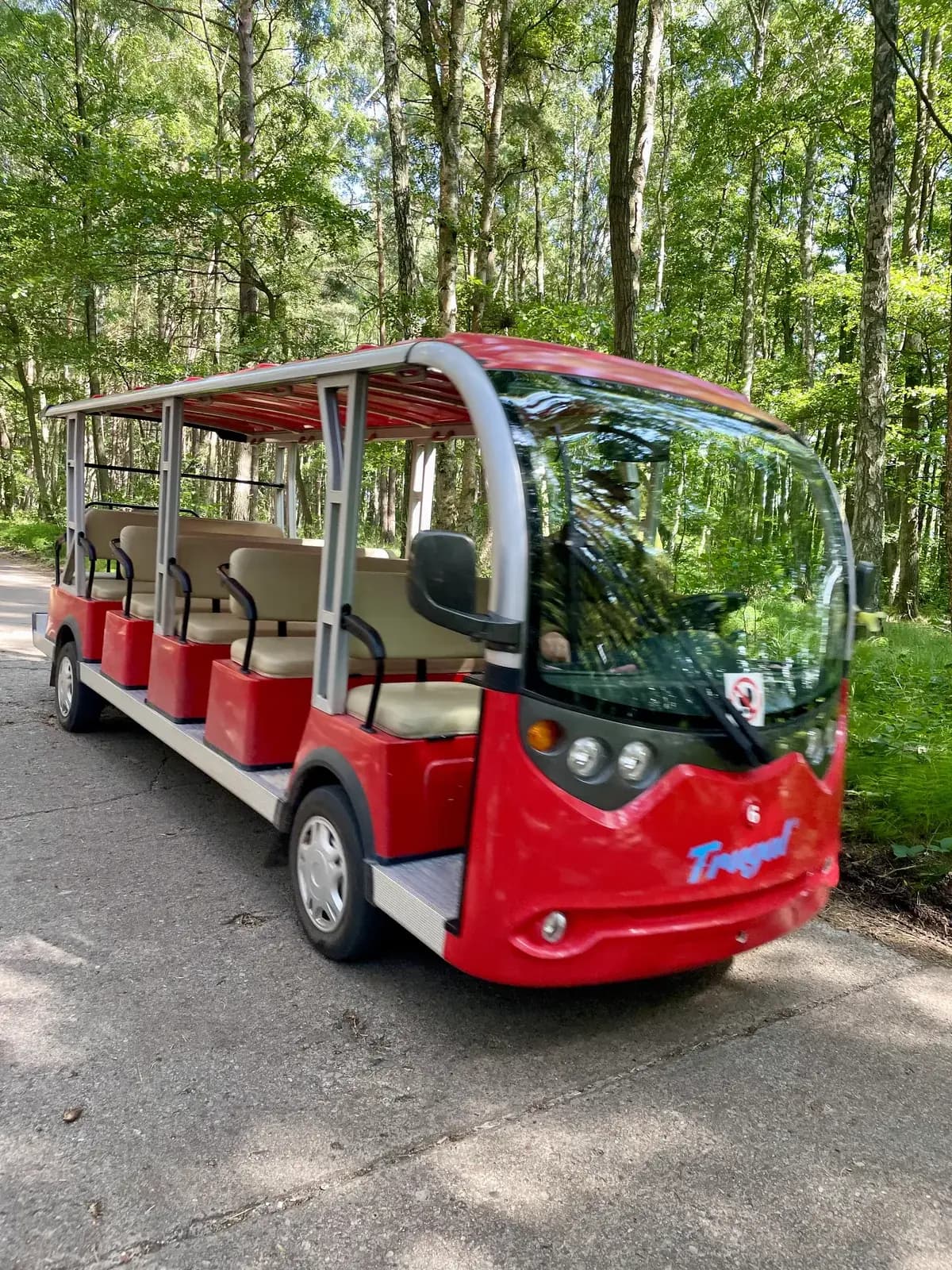
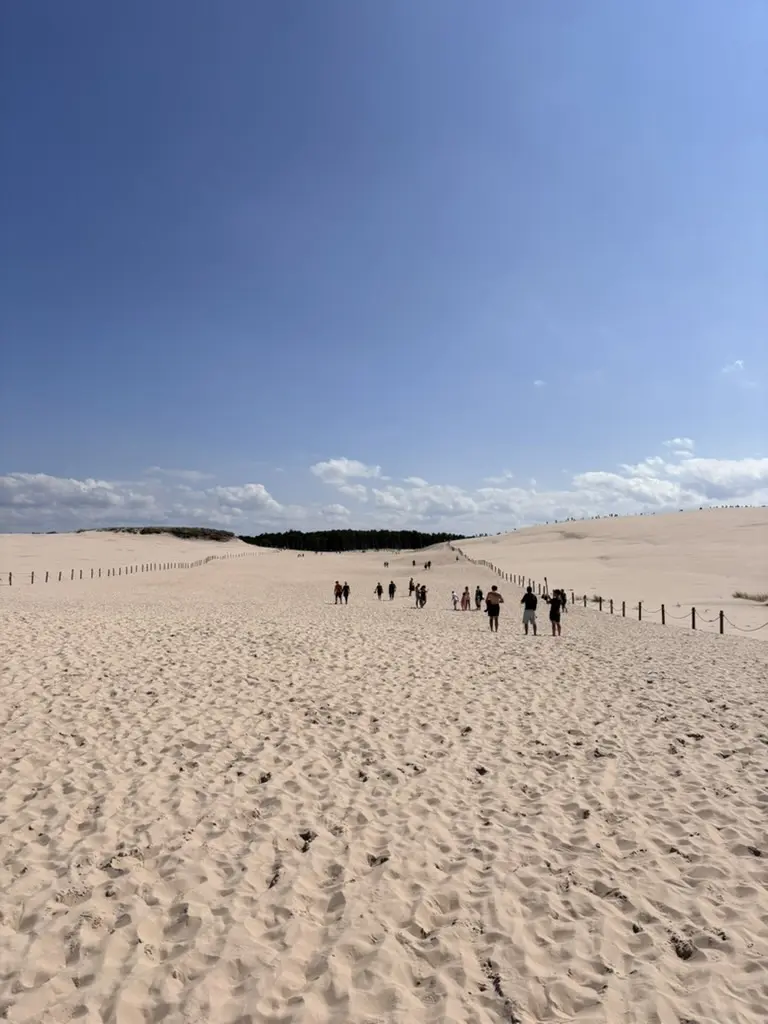
A note on transparency: the shifting dunes are only reachable on foot, by bike, or by melex (a small local electric vehicle, also called “meleks”) — no private vehicles are allowed on site. The trail from the Rąbka car park is 5.3 km one way, on flat ground, about 1 hr 30 min walking; allow more like 7.5 km and 2 hours for the full loop back via the beach. For those who'd rather not walk, the melex costs around 25 zł per person per trip, with a service that usually starts later in the morning — arriving early (around 8am) lets you dodge both the crowds and the meleks. Entry to Słowiński National Park is also paid (around 9 zł full price, 4.50 zł reduced).
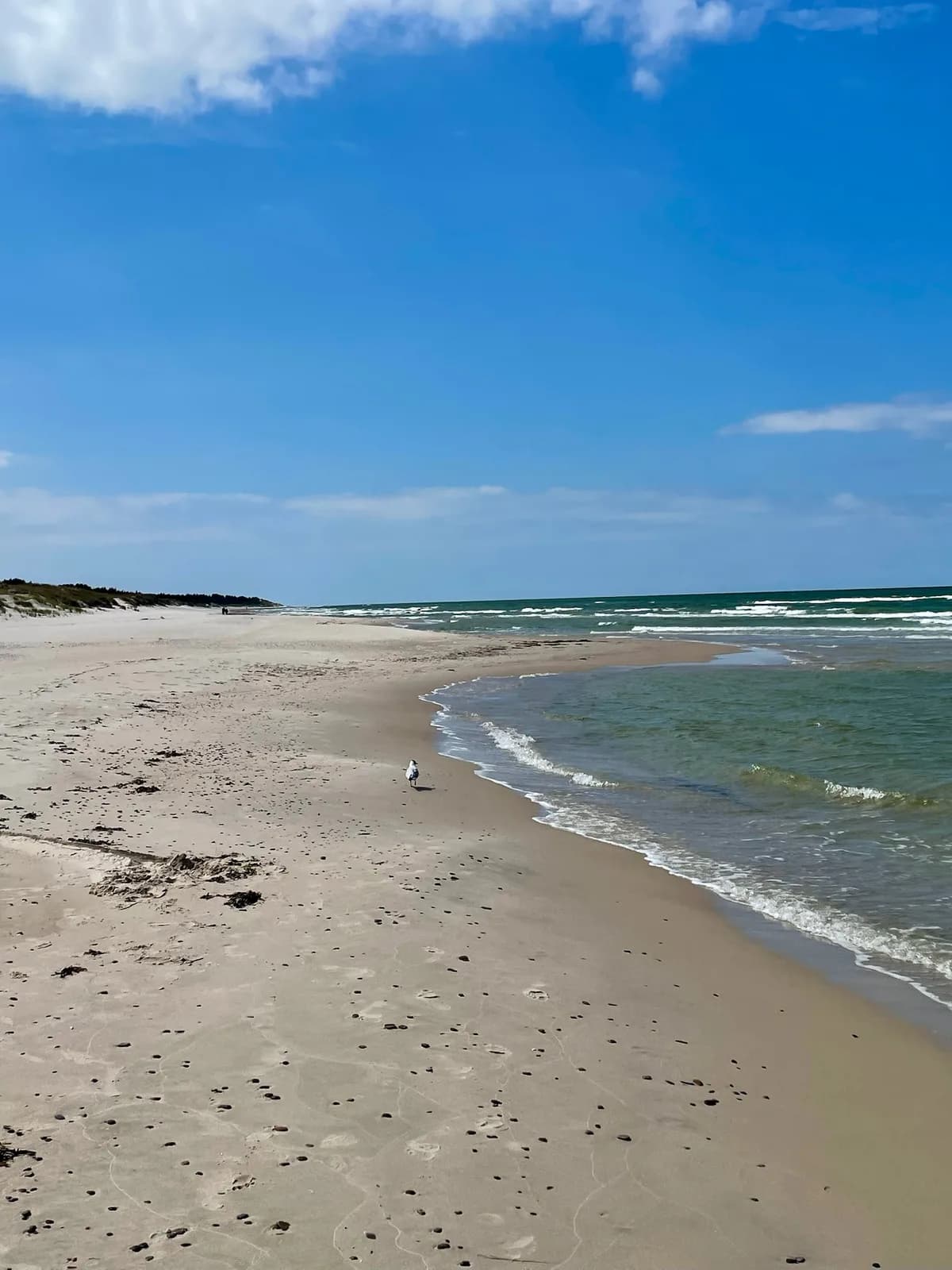
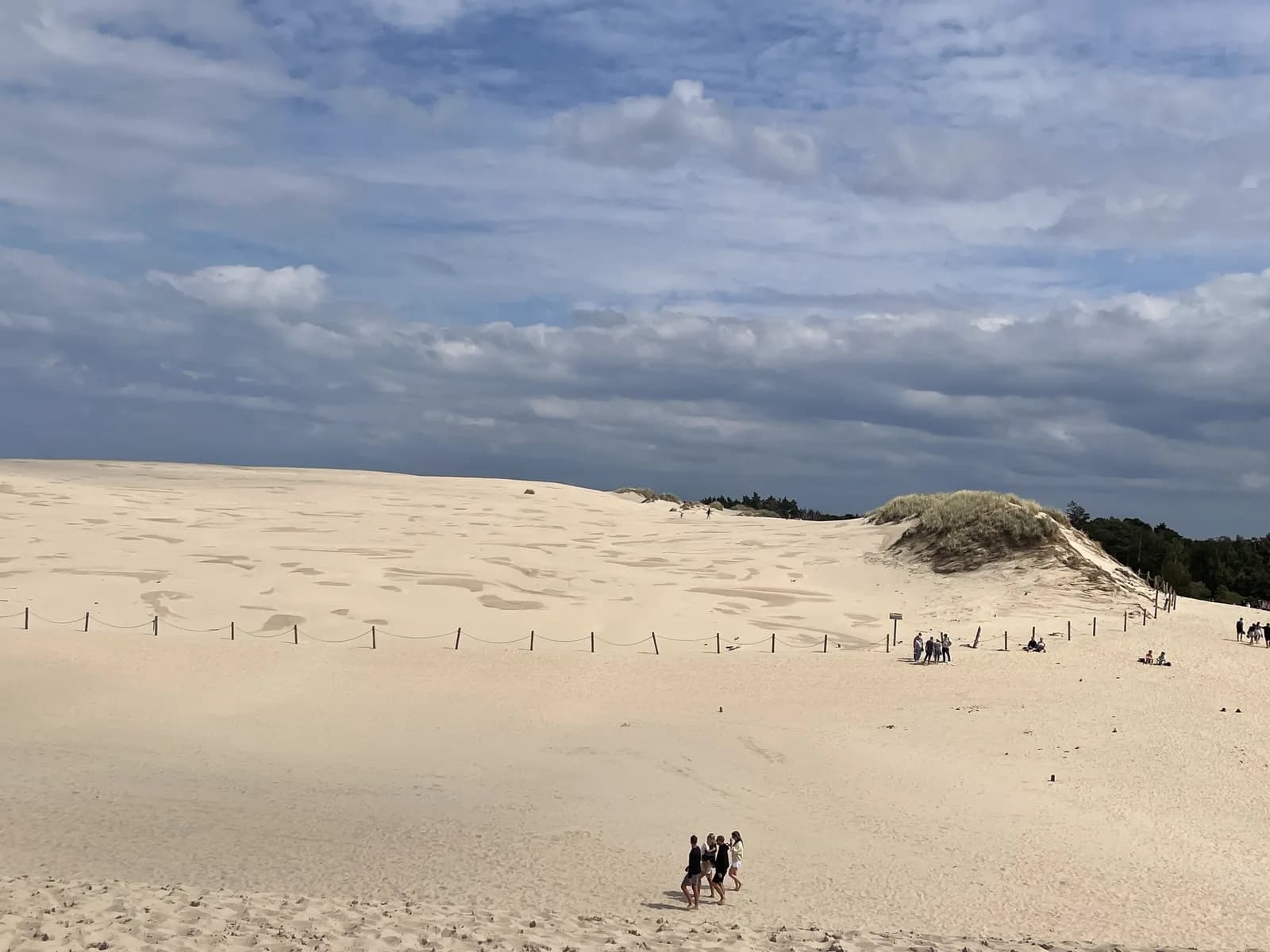
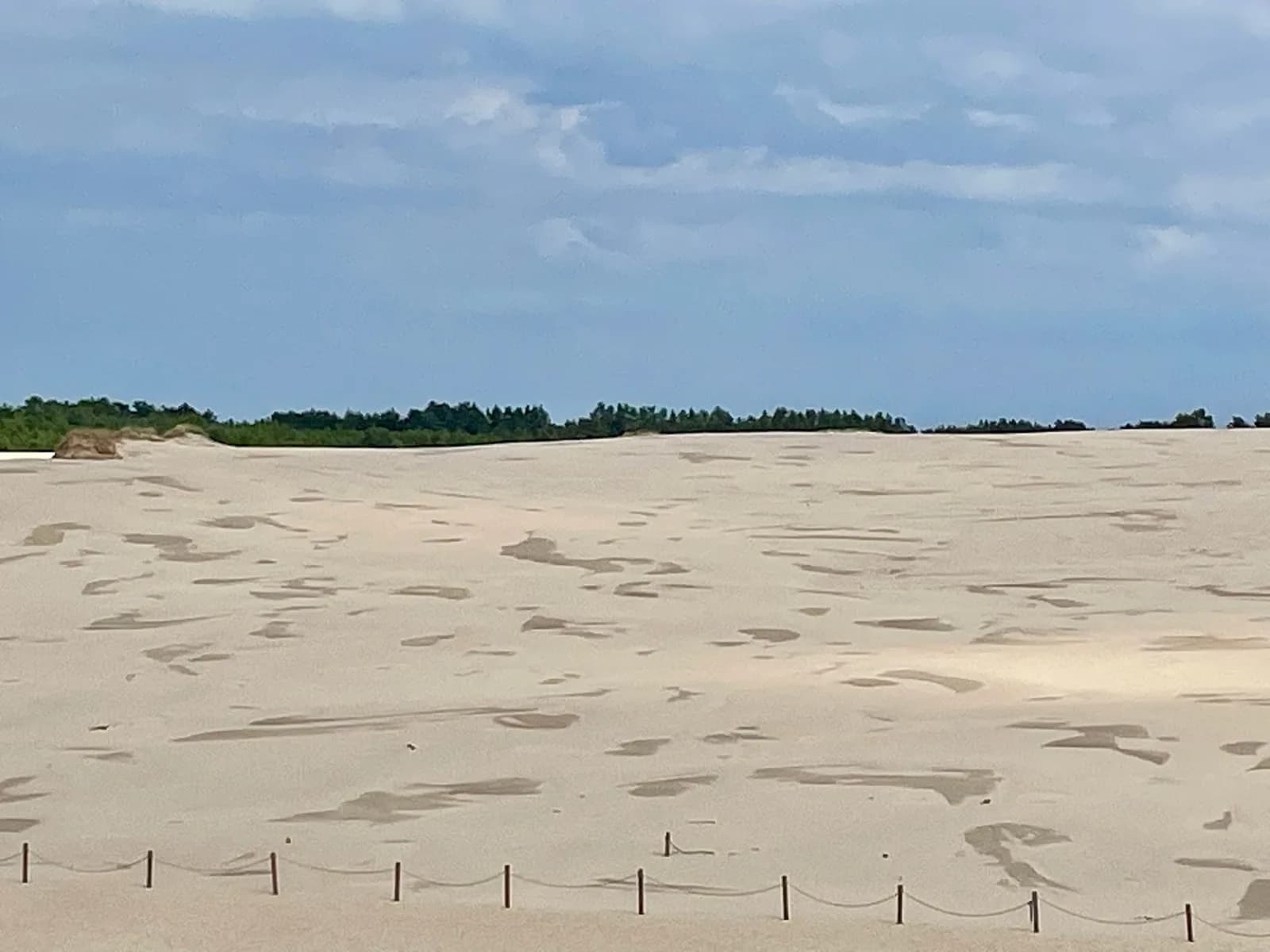
Once there, you climb the dune itself, but not everything is open: a good part of the site stays protected, and you can't go beyond the summit in some areas. A short extra walk lets you pass between two dunes to reach the sea. Unlike the Dune du Pilat, the place is noticeably less busy with international tourists — we came across very few foreigners, with a genuine sense of solitude on the beach.
Watch out: there's no lifeguard-supervised swimming here, and the water is fairly cool (17-18°C at best).
On the way back, we stopped for lunch on a terrace mid-afternoon, served without any trouble despite the hour — a real pleasure under mild temperatures and pleasant weather.
Łeba beach, on foot from our accommodation
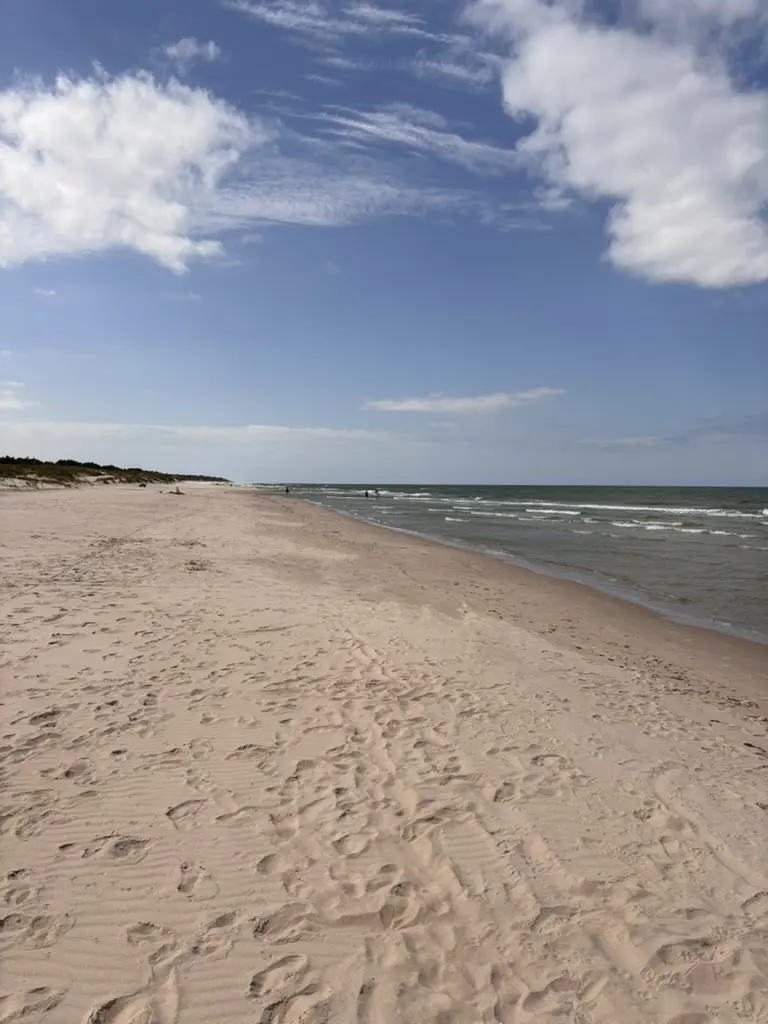
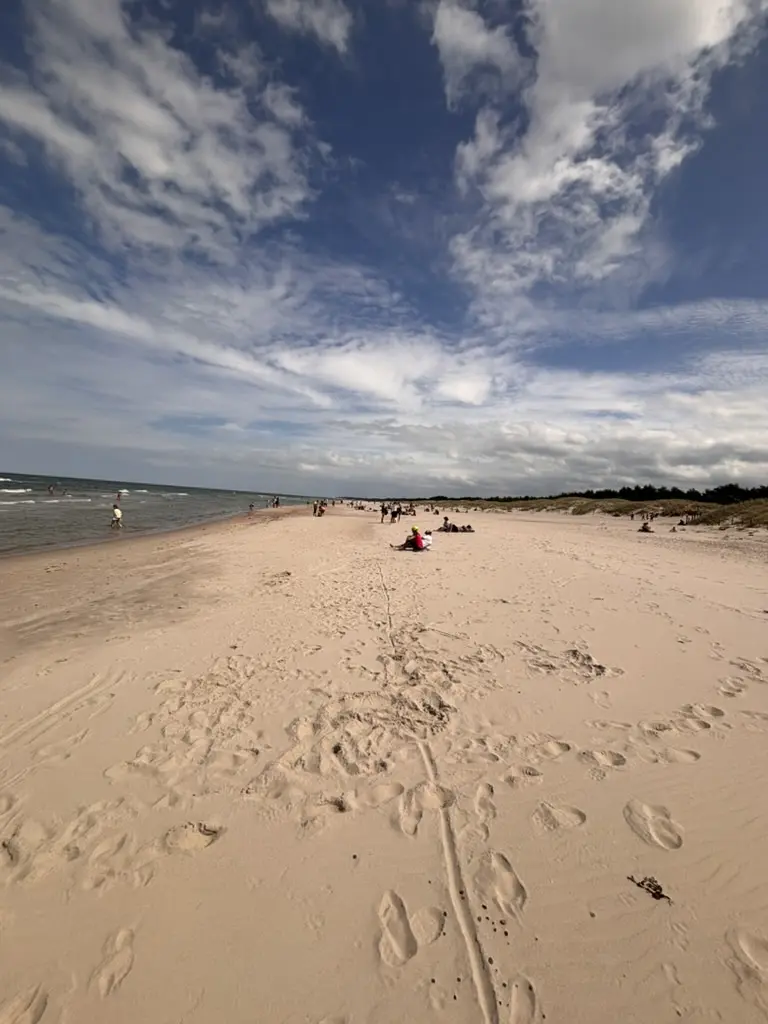
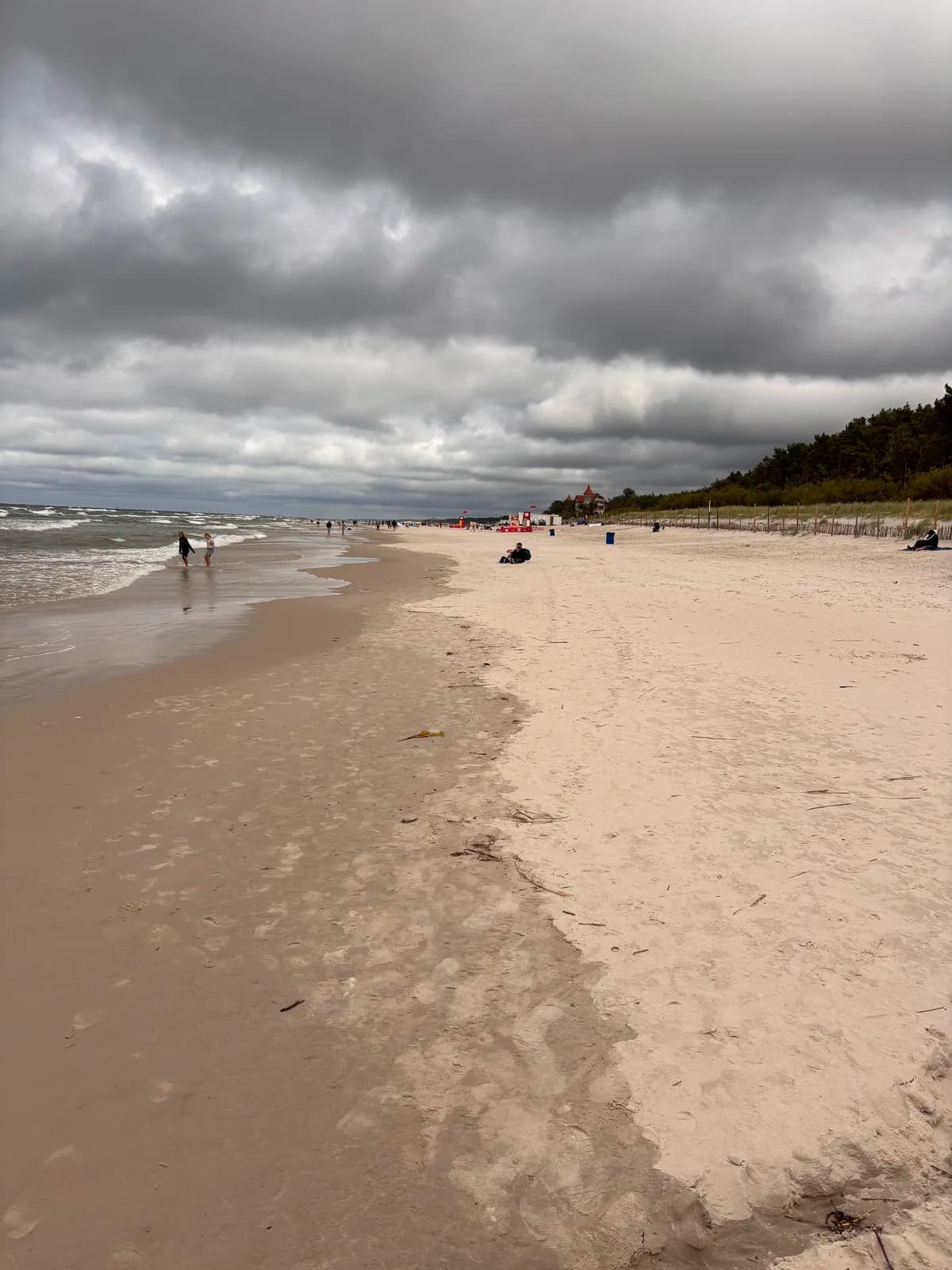
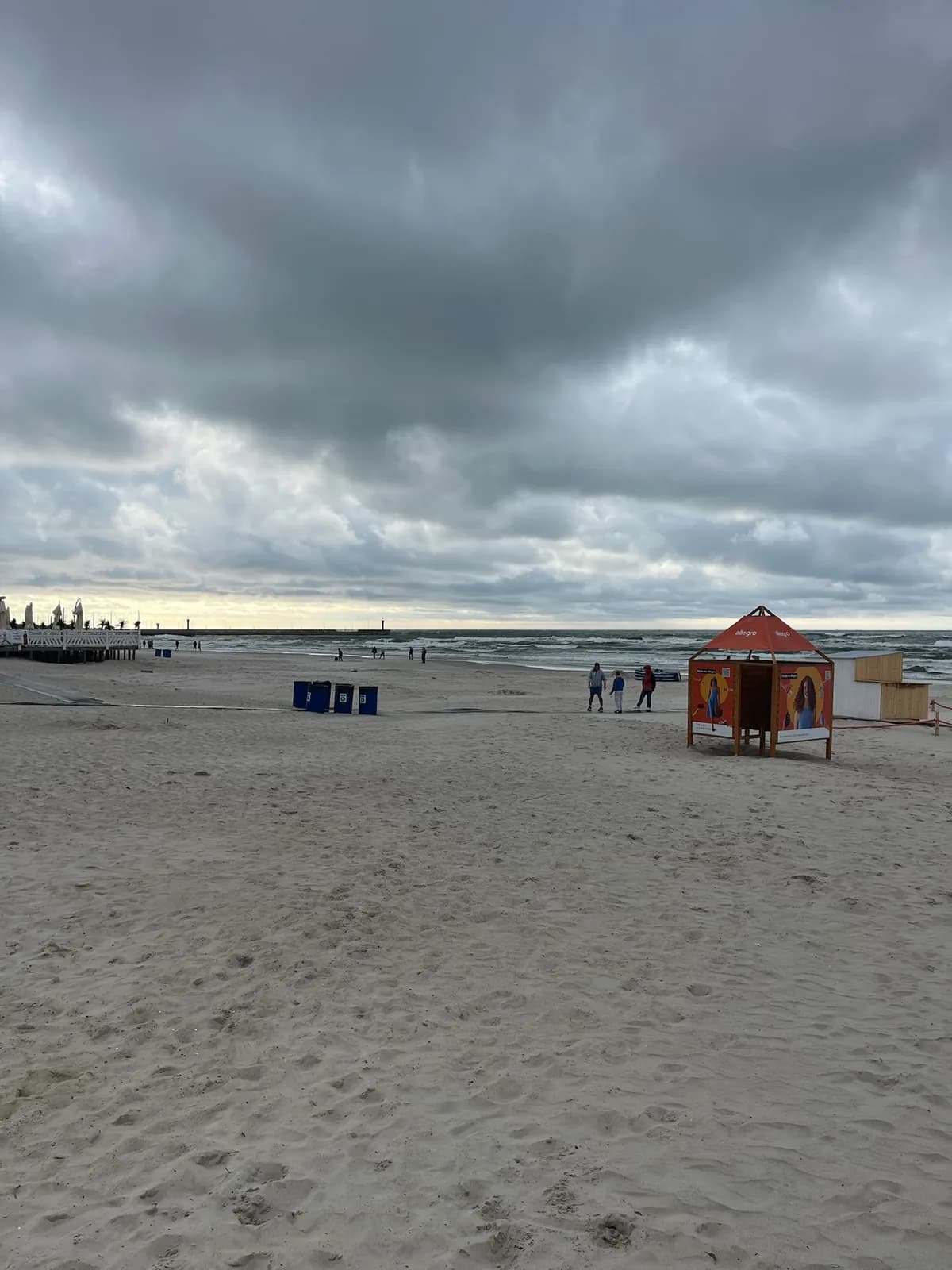
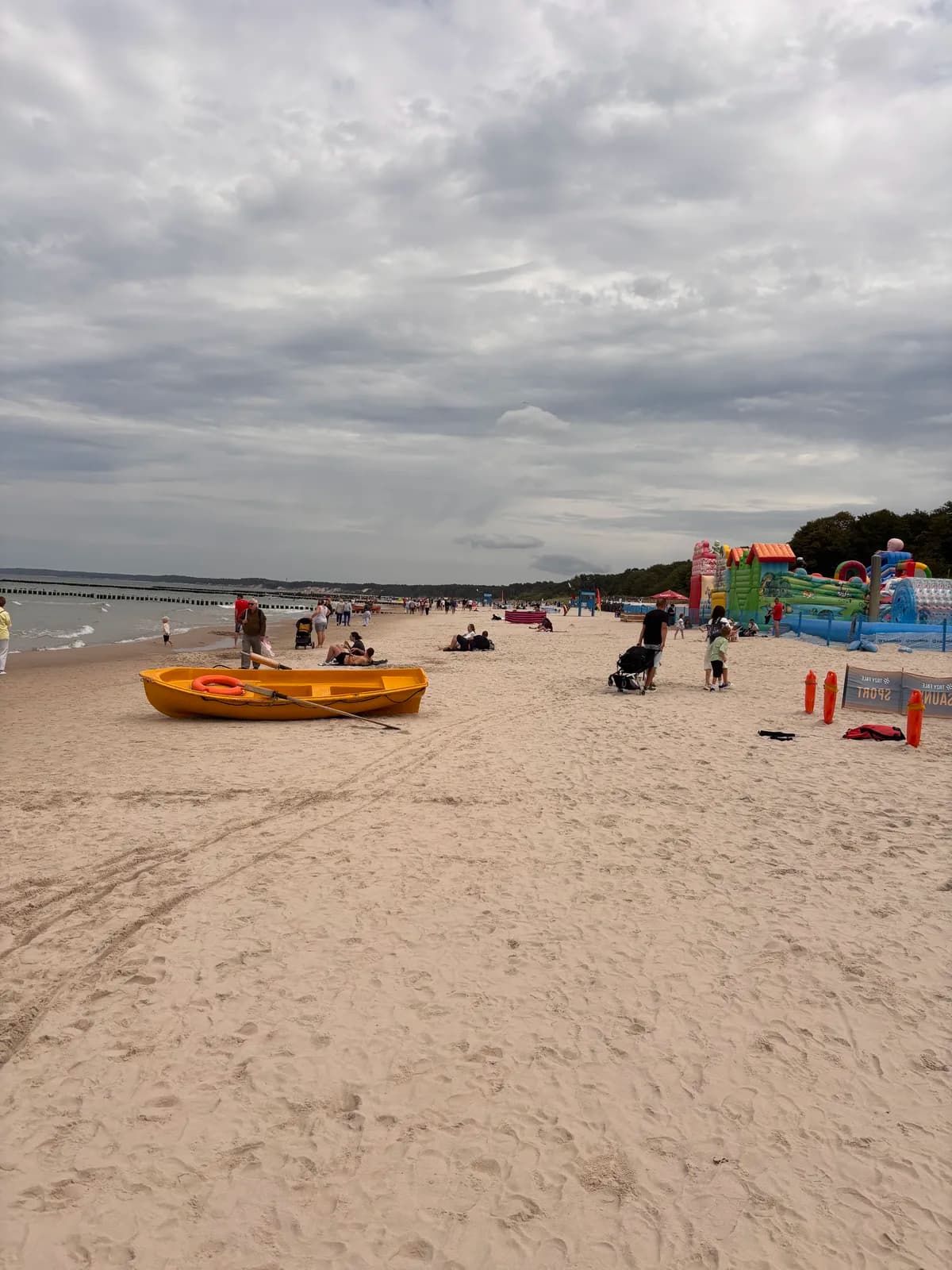
True story, July 2026: for our first day there, we made the most of how close our accommodation was (about 2 km from the centre) to reach Łeba and its beaches entirely on foot — a good way to stretch our legs after two straight days on the road. In total, about 3 to 4 hours' walking and 15 to 16 km, on completely flat ground, with no difficulty at all.
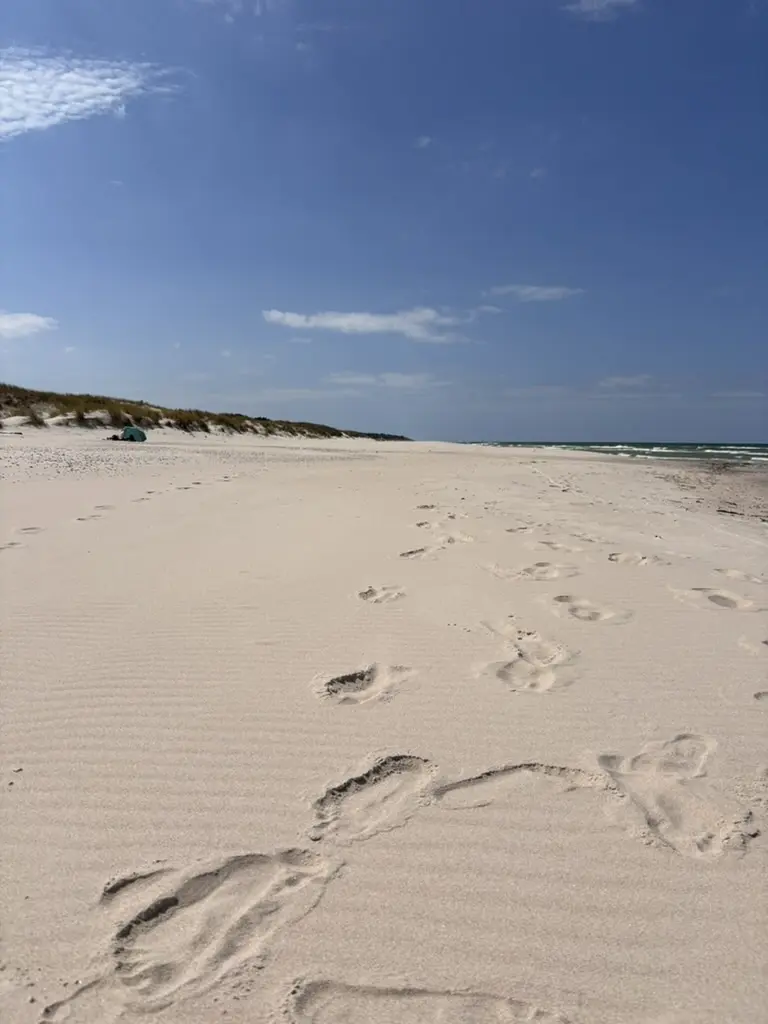
One of the area's great advantages at this time of year: the cool weather, very welcome amid a heatwave elsewhere in Europe, even under cloudy skies. The beaches, with their light, fine sand, struck us as noticeably less plastic-littered than what you see on southern European beaches.
Good to know
A bit further along this same coast, we also took a day trip to Ustka, a livelier town than Łeba.
▸ Good to know
- The park is only accessible on foot, by bike, or by electric minibus — no private vehicles are allowed inside.
- Bike hire is simple and affordable if your accommodation offers it, as ours did.
- Bring water and something warm: there's little shade once on the dunes, and the wind can be cool despite the sun.
See also
Frequently asked questions
How do you visit Słowiński National Park?
The park can only be visited on foot, by bike, or by melex (a small local electric minibus) — no private vehicles are allowed on site. From the Rąbka car park, allow 5.3 km one way on flat ground (about 1 hr 30 min walking), or more like 7.5 km and 2 hours for the full loop back via the beach. The melex costs around 25 zł per person per trip, with a service that usually starts later in the morning. Entry to the park is paid (around 9 zł full price, 4.50 zł reduced). Bike hire, often offered by accommodation in the area (around 10 to 20 zł per bike for half a day in our case), is a good way to combine the dunes with the coast.
Can you swim near the Łeba dunes?
There's no lifeguard-supervised swimming on this stretch of coast, and the water stays fairly cool (17-18°C) even in summer.