What to Do in Gdańsk and the Tricity
By Jérôme R · Not visited yet: research-based guide · Updated · How we work
Gdańsk, Sopot and Gdynia form the “Tricity” (Trójmiasto), three towns linked by a shared train network, each showing a different face of the Polish Baltic coast: Hanseatic heritage in Gdańsk, a chic seaside resort in Sopot, a modernist port city in Gdynia. For the practical side of your trip, check our practical guide to the Tricity.
Gdańsk's Old Town (Główne Miasto)
Around 90% destroyed during the war and later rebuilt, Gdańsk's historic heart retains its Hanseatic architecture. Długa street and Długi Targ square, lined with colourful merchant houses, link the Golden Gate to the Green Gate; you'll find the Neptune Fountain (1633), the city's symbol, in front of the Artus Court. Free access at any time.
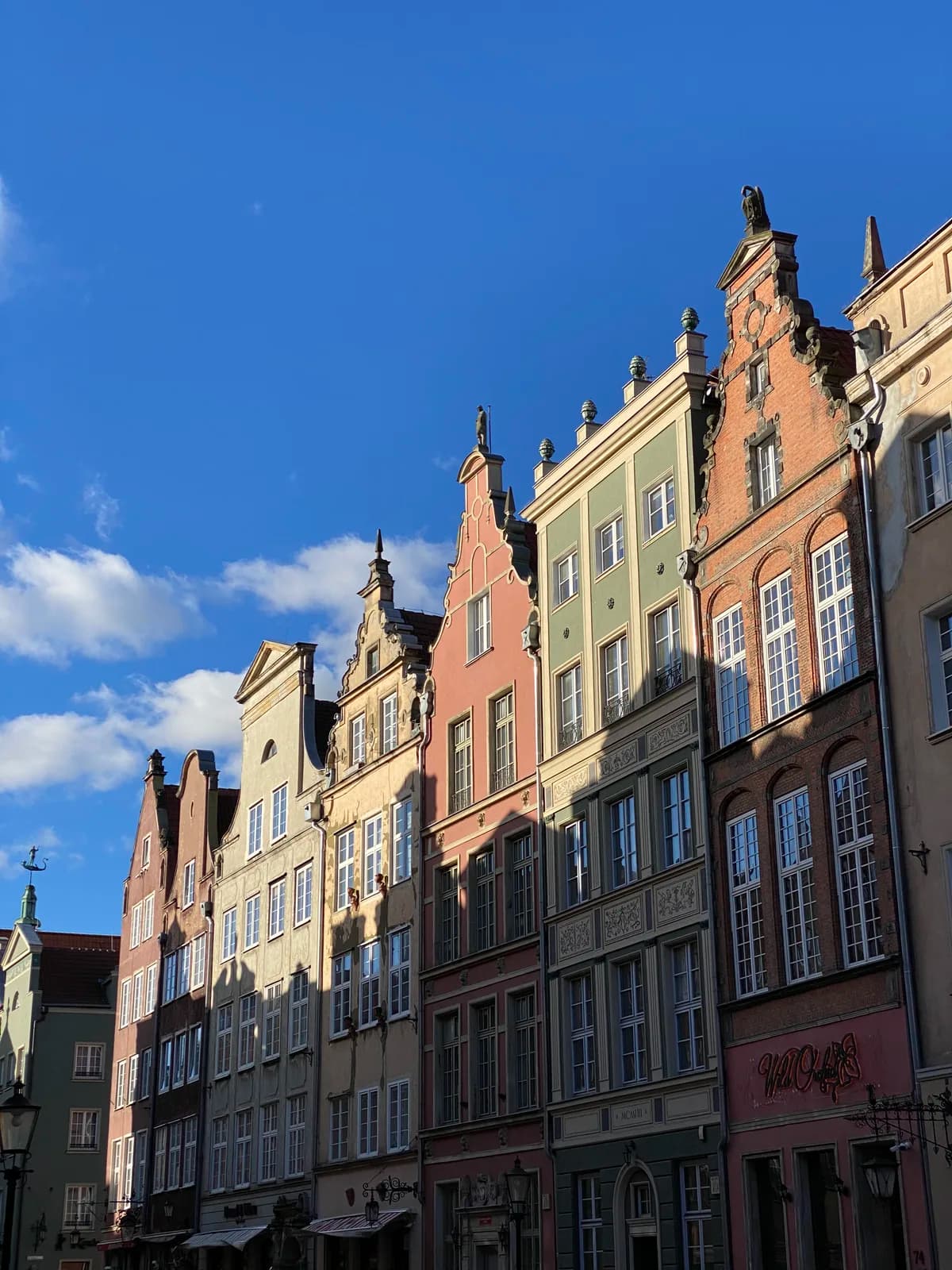
Photo credit: Thomas Woodtli — Wikimedia Commons, licence CC BY-SA 2.0.
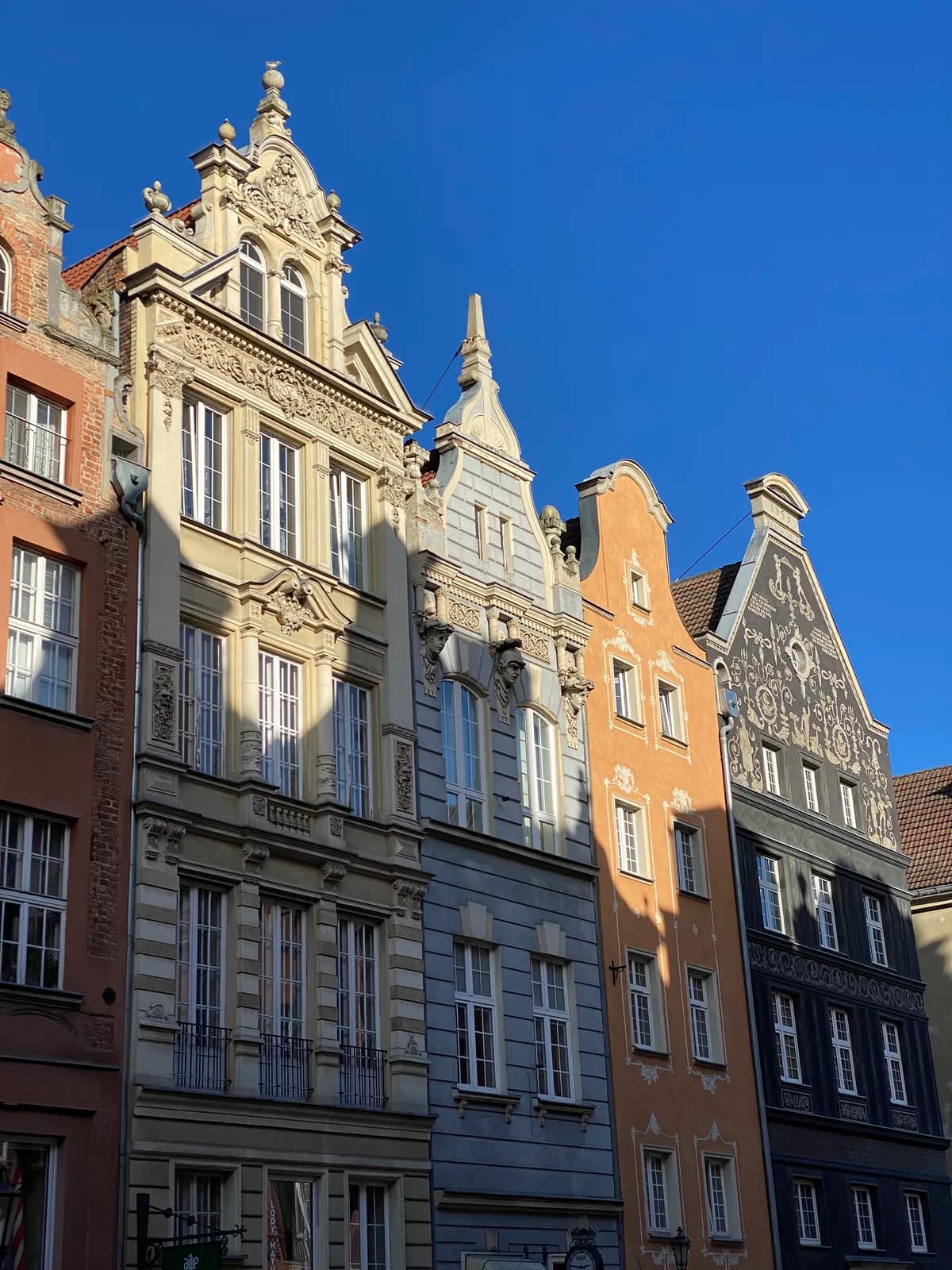
Photo credit: Thomas Woodtli — Wikimedia Commons, licence CC BY-SA 2.0.
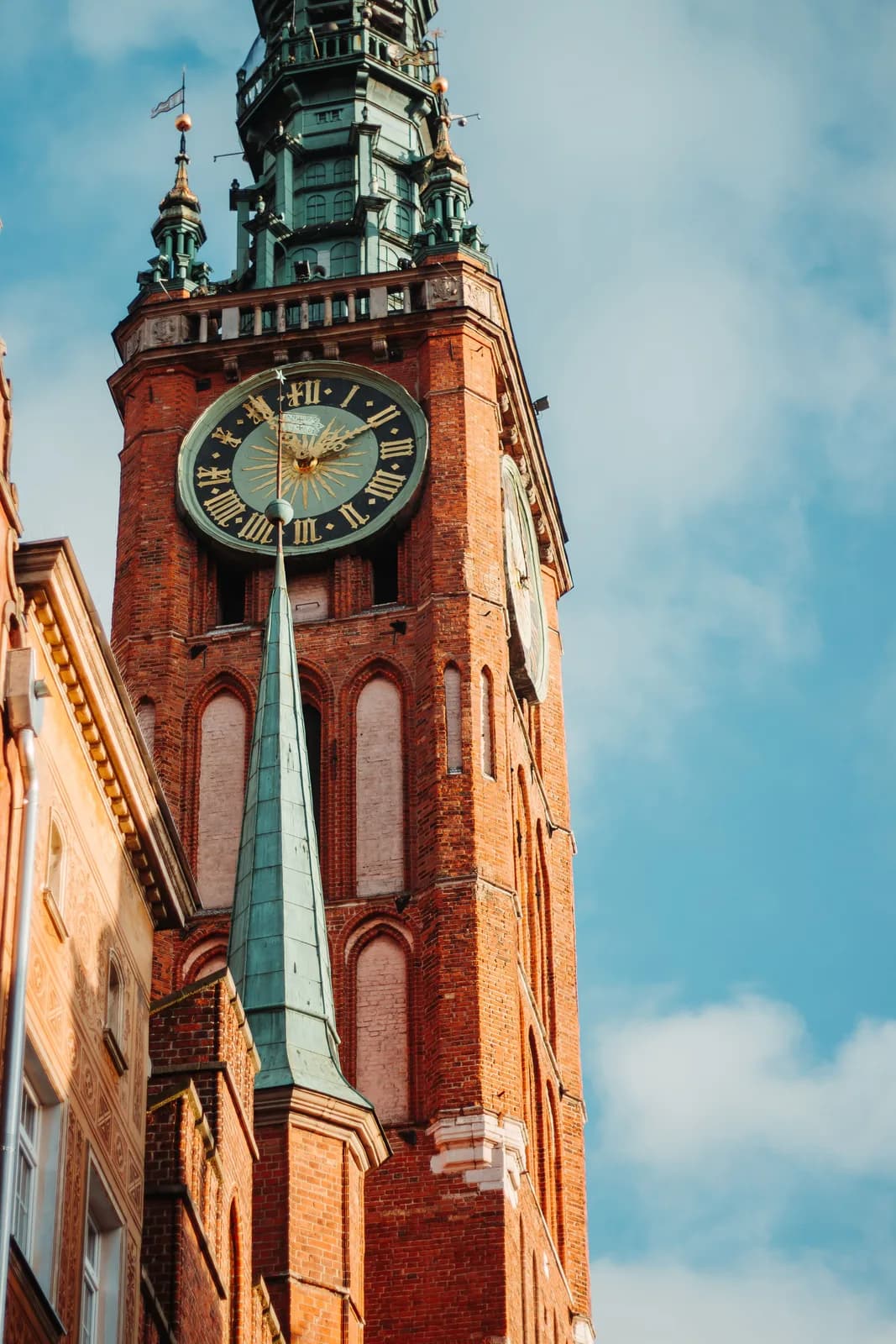
Photo credit: vedat — Pexels.
St Mary's Basilica
One of the largest brick churches in the world, built between 1343 and 1502. It served as a Lutheran church for around four centuries before becoming Catholic again. Its tower has 409 steps and rises to 82 metres, with a view over the whole Old Town.
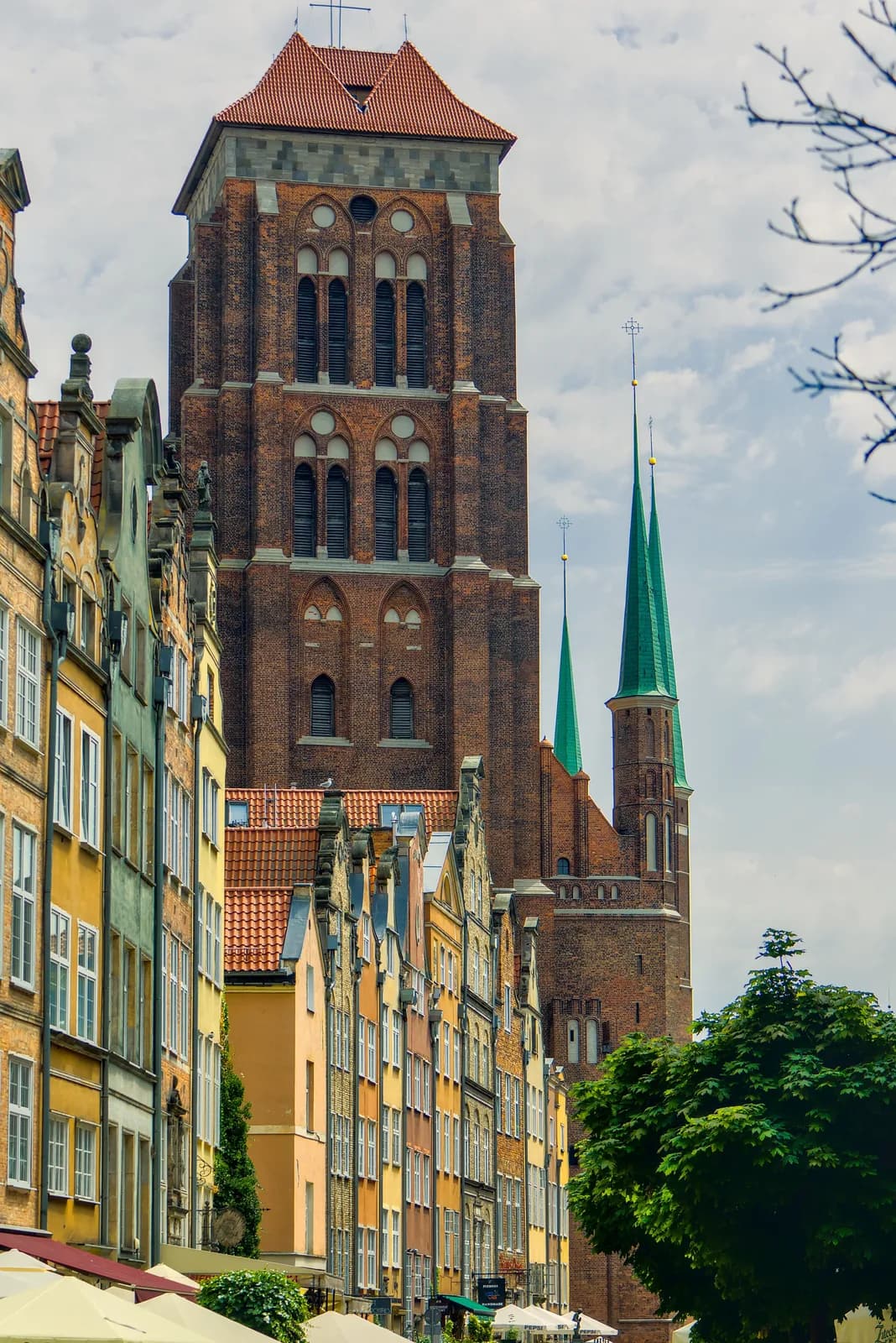
Photo credit: hvitkerist — Pexels.
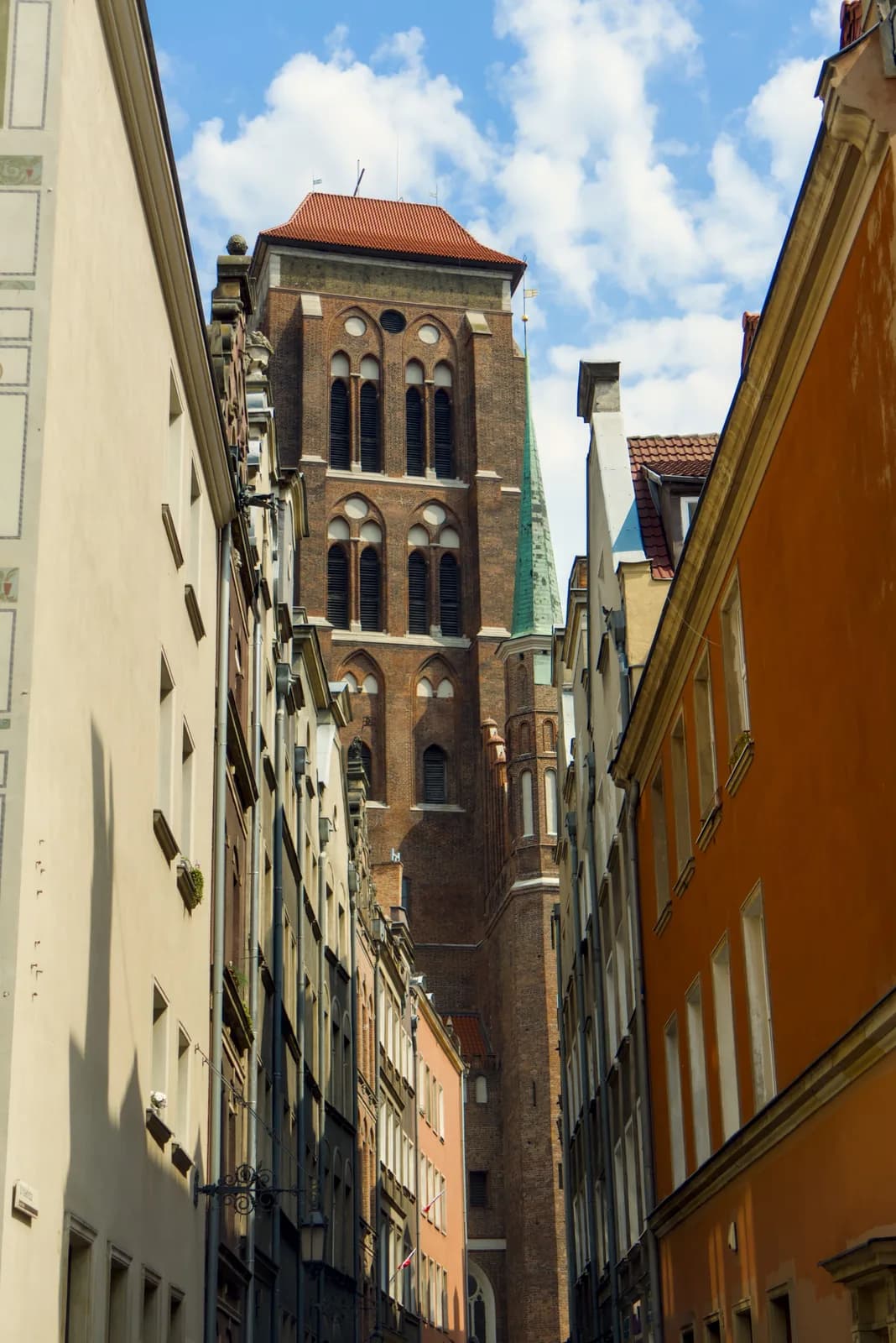
Photo credit: hvitkerist — Pexels.
The Museum of the Second World War
Opened in 2017, partly underground, it displays over 2,000 objects across about 5,000 m². It stands not far from where the war began, on 1 September 1939. Hours (main exhibition): September to June, Tuesday 10am-4pm and Wednesday-Sunday 10am-6pm; in July-August, Wednesday-Sunday until 8pm; closed Mondays. Prices (in effect since February 2025): 32 zł full price, 22 zł reduced, 72 zł for a family ticket (up to 5 people).
The European Solidarity Centre, on the shipyard site
Housed on the site of the former Gdańsk Shipyard, birthplace of the Solidarność movement in 1980, in an iconic building shaped like rusted ship hulls. Hours: May to September, Monday-Friday 10am-7pm and Saturday-Sunday 10am-8pm; October to April, Monday-Friday 10am-6pm and Saturday-Sunday 10am-7pm. Ticket including audio guide: 40 zł full price, 35 zł reduced, from 100 zł for a family ticket.
Sopot's pier, the longest wooden one in Europe
At 511.5 metres long, 458 metres of it directly over the water, it's the longest wooden pier in Europe. Sopot is the busiest, chicest seaside resort on the Polish coast, with its lively shopping street Monciak (Bohaterów Monte Cassino) leading straight to it. Entry to the pier: 10 zł full price, 5 zł reduced (ticket office open from April to the end of September).
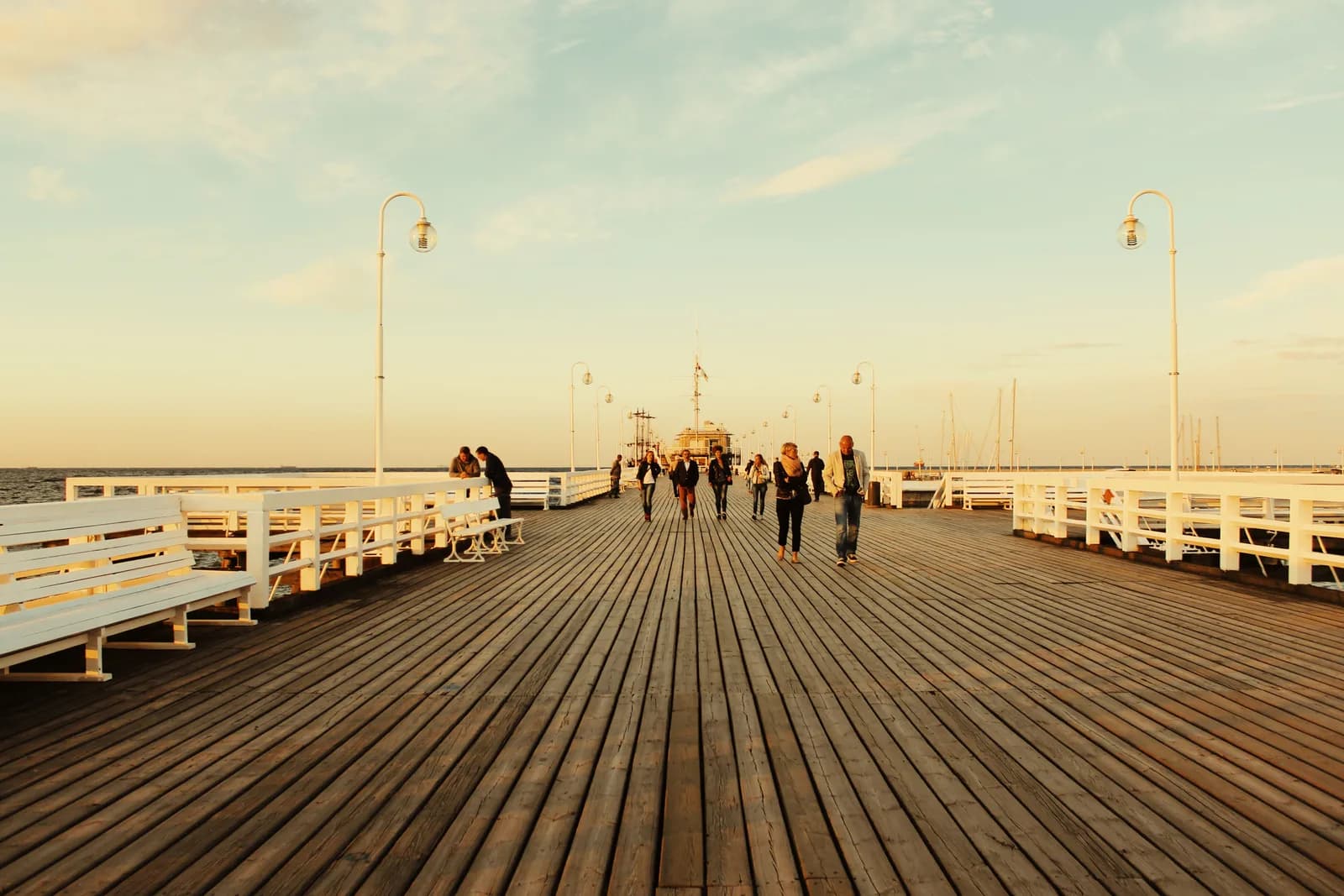
Photo credit: pawel-l — Pexels.
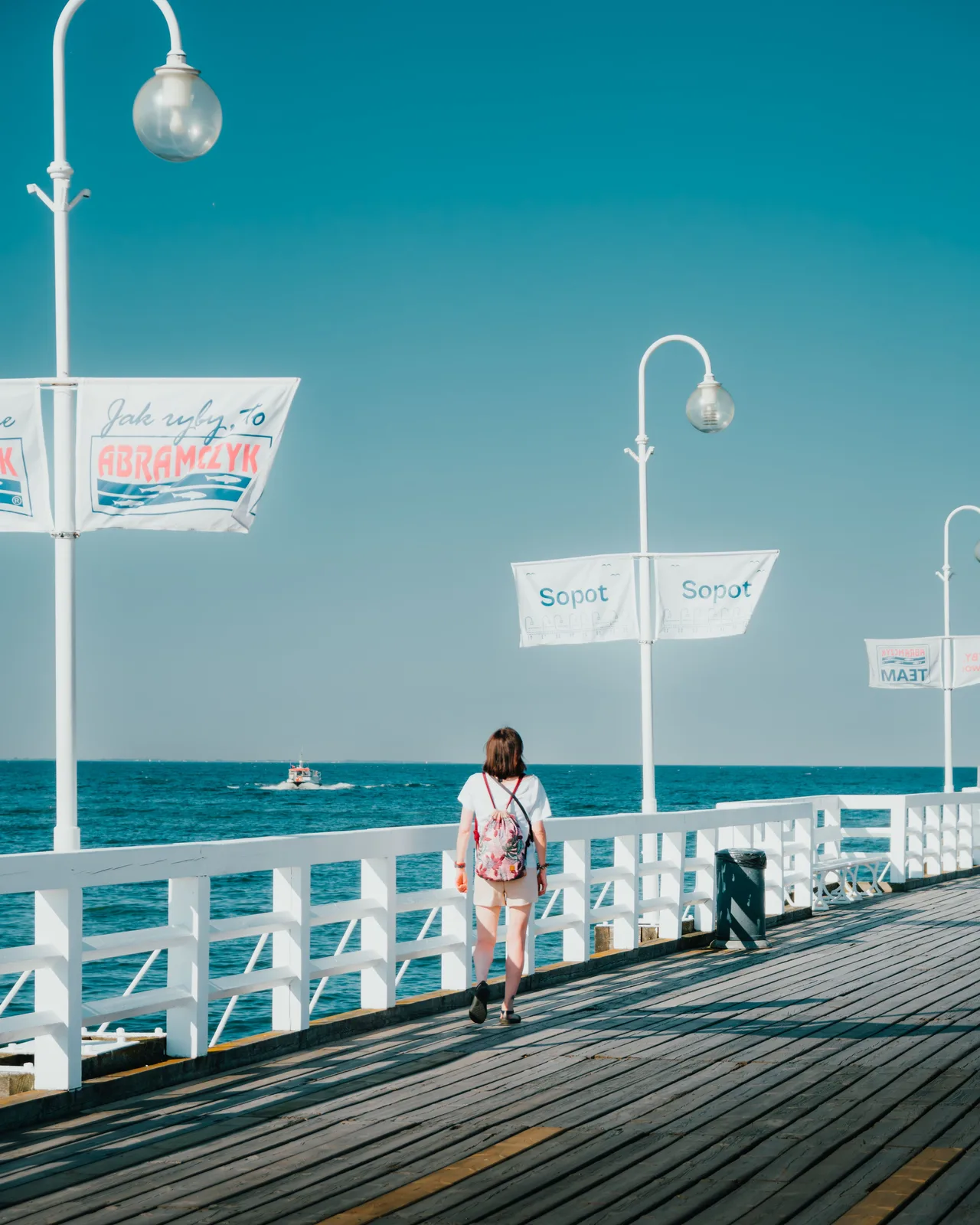
Photo credit: maja-kos — Pexels.
Gdynia, the modernist seafront
A port city built almost from scratch between the wars, with Art Deco and functionalist architecture quite distinct from its neighbours. Worth seeing on the seafront: the Dar Pomorza, a 1909 training tall ship now a floating museum (28 zł full price, 17 zł reduced, open daily 10am-6pm), and the ORP Błyskawica, the oldest preserved destroyer in the world, active during the Second World War (30 zł full price, 19 zł reduced, Tuesday-Sunday 10am-6pm). The residential districts of Orłowo and Kamienna Góra offer lovely views over the bay.
Our suggested itinerary: Gdańsk and the Tricity in 3 days
Frequently asked questions
How many days should I plan for visiting Gdańsk and the Tricity?
Two days let you see Gdańsk and Sopot; three days give you time to add Gdynia. Since the SKM train links the three towns in a matter of minutes, it's easy to combine them without a rushed “do it all in one day” approach.
What's the difference between Gdańsk, Sopot and Gdynia?
Gdańsk is the historic city, with its Hanseatic Old Town and major museums. Sopot is the chic seaside resort, centred on its pier and nightlife. Gdynia is a 20th-century modernist port city, quieter, with its museum ships and seafront residential districts.